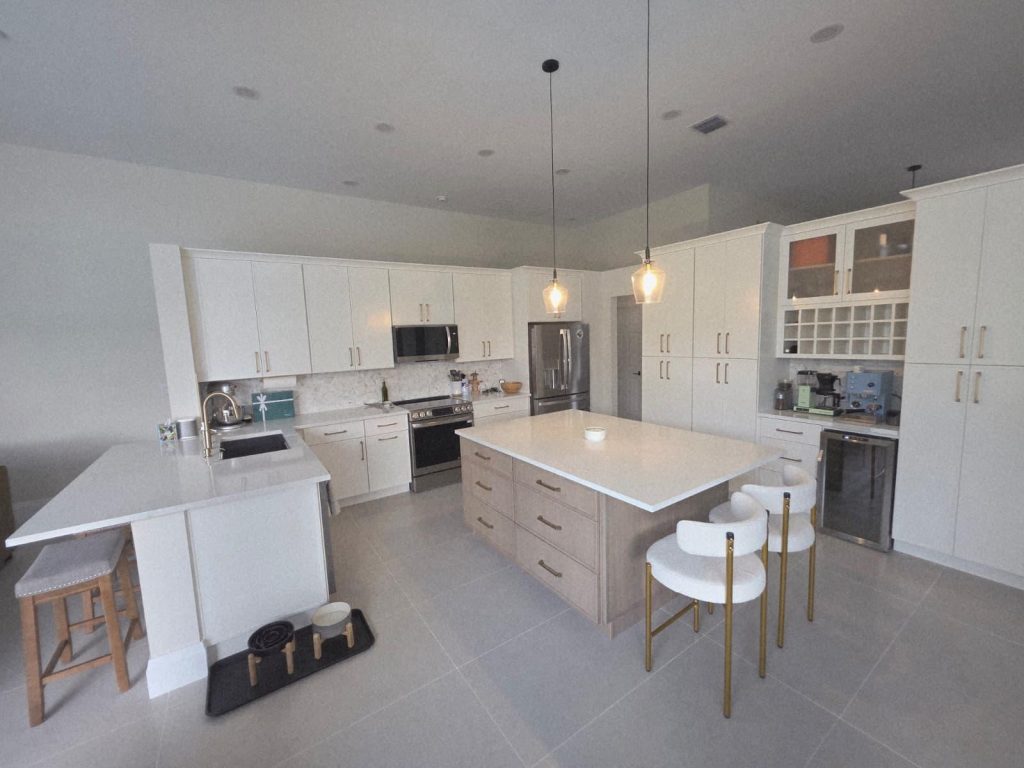
A remodeling project is a useful time to discuss comfort, lighting, appliance selections and existing building conditions. Start with the parts of the home that concern you, then identify which decisions belong in the renovation and which need a separate specialist assessment.
Describe the problem before selecting a product
Record where you notice discomfort, glare, drafts or uneven lighting. Share relevant maintenance records and available plans. Avoid assuming that a particular product will resolve an issue without reviewing the existing conditions.
Coordinate appliance and lighting selections
For a kitchen, gather appliance model numbers, dimensions and installation specifications before finalizing cabinets and connections. Compare product labels and manufacturer information directly. Plan lighting locations around tasks and the proposed layout rather than selecting fixtures only from photographs.
Review work that affects existing systems
Changes to walls, ceilings or room layouts may involve existing electrical, plumbing or air-conditioning components. Ask which assessments and trades are needed and identify the included work in the proposal. Building-system upgrades should be evaluated for the actual property; a general remodeling guide cannot establish performance or savings.
Keep separate projects separate
Solar installations, major equipment replacements and other specialist work require their own scope, suitability review and provider. Do not assume they are included in an interior remodeling proposal. If another provider is involved, discuss access, sequencing and responsibilities before scheduling.
Record the agreed scope
Keep product selections, installation requirements, owner-supplied items and exclusions together. Ask for written manufacturer care and warranty information at completion.
Explore our full-home remodeling and kitchen remodeling services to plan the interior work, or review our remodeling process.