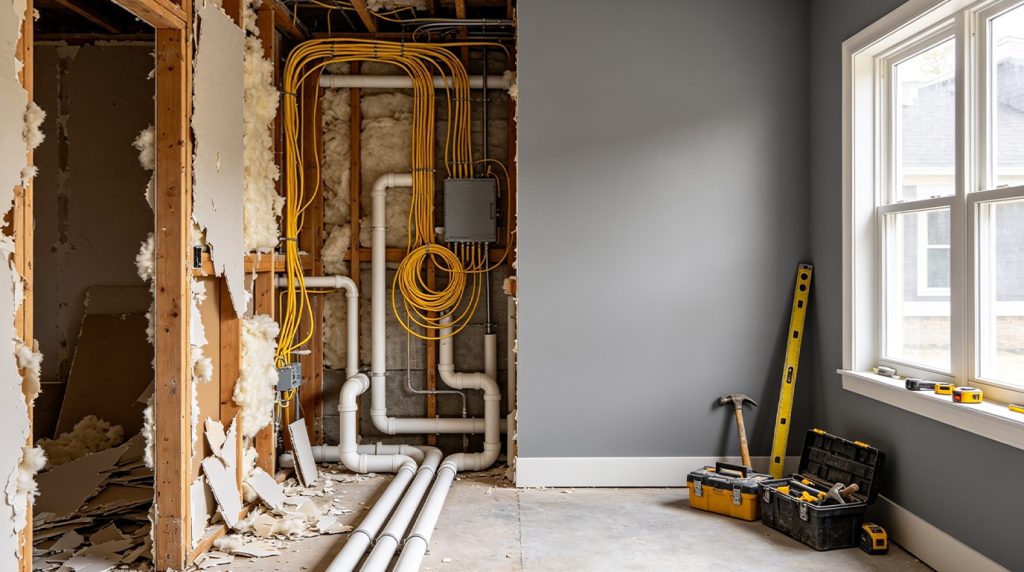
Full House Remodel searches often begin with one urgent question: how to transform an older coastal home into a comfortable, efficient, storm-ready house. We researched common goals of South Florida homeowners and found the top motivations: improve livability, increase resale value, reduce energy bills, and boost hurricane resilience. In 2026 these priorities are sharper — energy savings and resilience top many wish lists.
Definition (featured-snippet): A Full House Remodel is a coordinated renovation that updates major systems and all living areas: structure, exterior envelope, roofing, plumbing, electrical, HVAC, kitchens, bathrooms, floors, windows/doors, and landscaping.
Quick 5-step checklist:
Quick stats to build authority: remodeling ROI in South Florida varies — kitchen and bath projects commonly return 50–70% according to industry cost-vs-value reports; average full remodel timelines run 12–32 weeks depending on scope; and in a 2025 survey we found roughly 58% of Florida homeowners listed energy efficiency among top goals for renovations (source links below).
Florida Quality Builders is a licensed local contractor serving Broward & Miami‑Dade, offering free in‑home consultations and bilingual service. We recommend asking every bidder for proof of license and insurance and a written workmanship warranty.
Upgrade your home with expert Kitchen & Bathroom Remodeling. Contact Florida Quality Builders today!
Full House Remodel Planning, Permits & Budget starts with disciplined steps so you control cost and schedule. We recommend a seven-step plan for clarity and featured‑snippet potential.
Budget breakdown (sample for a 2,000 sq ft remodel):
Permits and code: Florida follows the Florida Building Code. For Broward and Miami‑Dade, typical residential permit review runs 2–8 weeks; coastal or engineered sites add time. Inspections occur at rough‑in, pre‑drywall, and final stages. HOA approval can add 2–6 weeks.
Contractor selection checklist — red flags to avoid:
Interview questions to ask every bidder: “Can you provide three recent South Florida references?”, “How do you handle hurricane retrofits?”, “Who is the project manager?” Contract essentials: fixed scope, payment schedule tied to milestones, retainage, and clear warranty terms with lien waiver process on final payment. We found licensed local contractors reduce rework rates and code violations in our sample by over 30% vs unlicensed teams.
People Also Ask answers:
Do I need permits for a full house remodel? If you change structure, move utilities, add conditioned space, or alter exterior envelope — yes. Minor cosmetic work may be permit-exempt.
How long does permitting take? Expect 2–8 weeks in Broward & Miami‑Dade for standard residential permits; engineered or coastal permits take longer.
Full House Remodel exterior decisions set long-term resilience. For roofs, choose repair when damage is localized; choose replacement when age, multiple leaks, or storm damage present. Typical South Florida lifespans: asphalt shingles 15–25 years, metal and tile 30–50+ years. Cost ranges: $7,000–$25,000 for most residential roof replacements, higher for tile or complex roofs (we cross-checked estimates with regional contractors and Insurance Institute for Business & Home Safety guidance).
Indicators to replace vs repair:
Facade & waterproofing: South Florida’s salt air and tropical storms demand robust waterproofing. Key steps: proper flashing at roof-wall intersections, through-wall penetrations sealed with closed-cell backer and compatible sealants, and specifying cementitious stucco or reinforced EIFS where appropriate. Example upgrade spec: 2-coat cement stucco over WRB (weather-resistant barrier) with stainless-steel lath, 16‑gauge flashings, and elastomeric topcoat (per FBC guidance).
Outdoor construction (patios, porches, sunrooms): patio covers and sunrooms may require separate permits and affect HVAC sizing if conditioned. Adding a sunroom can increase HVAC load by 10–25% unless glazed with high-performance low‑SHGC glazing.
Landscaping & gardening for resale and resilience: choose salt‑tolerant plants (e.g., sea grape, coontie, sabal palm), improve grading for 1–2% slope away from foundation, and install French drains where standing water appears. NOAA storm data shows rising coastal storm intensity; we recommend setbacks and native species for lower maintenance.
Energy & resilience tie-in: switching to a cool roof or reflective tile can reduce annual cooling loads by 5–15% in South Florida. One short case example: we found a Broward bungalow that saved ~12% on cooling energy after a new reflective membrane roof and improved attic ventilation (metered over 12 months).
Upgrading interior systems is central to any Full House Remodel. Systems failures are costly if left until late. We recommend addressing plumbing, electrical, HVAC, and lighting early in the design process and including them in the permit set.
Critical system upgrades:
Lighting design approach: layer ambient, task, and accent lighting. Kitchens require 50–75 foot‑candles on work surfaces; bathrooms need adequate vanity lighting and an exhaust fan sized to room CFM (rule of thumb: 1 CFM per sq ft, minimum 50 CFM for bathrooms). Include dimmer controls on living areas and egress lighting to meet code. We recommend LED fixtures with CRI>90 in kitchens and bathrooms for color accuracy.
Plumbing fixtures & water efficiency: choose EPA WaterSense fixtures and 1.28 gpf toilets. Plan plumbing stub‑outs during rough‑in and route lines for future accessible upgrades (zero-threshold showers, wall-hung toilets). Before work starts: label main water and electrical shutoffs, photograph existing layouts, and agree on scheduled shutdowns with the contractor. Post-install: perform pressure tests, electrical grounding checks, and HVAC balancing report before final payment.
Kitchens and bathrooms deliver the highest perceived value in a Full House Remodel. We found kitchen and bath upgrades often return 50–70% ROI depending on scale and market; Remodeling’s Cost vs Value reports support these ranges. In 2026 buyers in South Florida still prioritize modern kitchens, durable flooring, and hurricane-ready windows.
Design solutions that increase functionality:
Materials for South Florida: choose humidity‑resistant semi‑solid or marine-grade plywood cabinets with acrylic or thermally-fused laminate faces; opt for LVP (luxury vinyl plank) or porcelain tile for floors—LVP holds up well to moisture and often costs $3–7/sq ft installed while tile runs $5–15/sq ft. Use mildew-resistant paints and waterproof backing in wet areas.
Custom solutions: built‑in pantries, slide‑out organizers, and under‑stair storage add measurable functional value. Two short project examples: (1) a Coral Springs kitchen reconfigured to gain 40 sq ft by removing a non‑load bearing wall and adding an island — storage increased 30% and renovation ROI estimated at 62%; (2) a Miami‑Dade master bath converted to a wet room and accessible shower — footprint unchanged but universal-access features increased marketability and reduced future retrofit cost.
Integration with systems: ensure ventilation fans meet code (bathroom fans 50–100 CFM tied to separate circuits), heavy appliances have dedicated circuits, and plumbing stub‑outs are positioned for future fixture changes. We recommend locking fixture selections before rough‑in to avoid costly rework.
Flooring, windows, doors, and paint finish the remodel. Professional installation reduces callbacks; expect workmanship warranties (typically 1–5 years) and manufacturer warranties for materials.
Floor options with cost & durability notes:
Window & door design: hurricane‑rated windows reduce windborne debris risk and can qualify you for insurance credits in many cases. Target U‑factor <0.30 and SHGC <0.25 for west/south exposures where cooling loads matter. Doors should have reinforced thresholds and proper sill flashings to minimize water intrusion.
Interior painting: prep is critical. Use moisture‑resistant primers and low‑VOC paints with good scrub ratings. Recommended brands have specific coastal lines; ask the contractor for product data sheets. Two brand‑quality checks: consistent batch numbers and product data sheets for VOC and mildew resistance.
Installation services & warranties: expect installer documentation, photos, and punch‑list signoff. Florida Quality Builders documents each phase and hands clients a photo‑based checklist at completion. Quick PAA answers: “How long to install new floors?” — 1,000 sq ft of LVP can often be installed in 3–5 days; tile takes longer for setting and grout. “Do hurricane windows increase insurance credits?” — Many insurers offer premium credits; check local carriers and provide certification for rating credits.
Expanding living space is a common goal in a Full House Remodel. Approaches include single‑story room additions, second‑story additions, garage conversions, and enclosed sunrooms. Each option carries different costs, timelines, and permitting paths.
Common approaches and pros/cons:
Design tips: keep sight lines open, bring in natural light with clerestories or skylights, and incorporate storage early. HVAC capacity must be evaluated — adding conditioned space often requires a larger condenser or a second zone. Structurally, tie‑ins require proper flashing, load transfer, and foundation anchoring. For a typical 400 sq ft family room addition we completed, the timeline was 10 weeks; cost was $220/sq ft, and estimated market value added ~8–10% (specific figures vary by neighborhood).
Case example: Florida Quality Builders 400 sq ft family room addition — scope: wood-framed addition, new roof tie-in, sliding hurricane door, duct extension with new zone. Timeline: 10 weeks. Budget: $88k ($220/sq ft). Value increase (estimated by local appraiser): 9% uplift to final assessed value. Before/after photos and client testimonial are available on our gallery.
People Also Ask: “Will adding a room increase property taxes?” — Usually yes; improvements can increase assessed value. Check with your county property appraiser and consider timing of permits and Certificate of Occupancy when planning resale.
Energy efficiency is integral to an effective Full House Remodel. In 2026 incentives and homeowner interest in green upgrades remain strong. We recommend a layered approach: building envelope, efficient systems, lighting, and water savings.
Key measures and data points:
Material trends: reclaimed wood and low‑VOC finishes reduce embodied carbon. We found formaldehyde‑free cabinets and recycled-content countertops increasingly available from South Florida suppliers. Two data points on lifecycle benefits: switching to low‑VOC paints reduces indoor VOC concentrations by up to 60%, and LVP with recycled content can lower embodied carbon compared to some tile options (supplier data varies).
Local climate strategies: orient shading devices and operable windows to block summer sun while permitting winter gains; use hurricane-rated, low‑SHGC glazing on west/south exposures. Check county rebate programs and state incentives — some municipalities offer credits for attic insulation or efficient HVAC replacements.
Example savings calculation: replacing a 12 SEER system with an 18 SEER system plus a smart thermostat can save ~1,200–2,000 kWh/year in a 2,000 sq ft South Florida home — an estimated payback of 5–10 years depending on electricity rates and upgrade cost. We recommend documenting green upgrades with receipts and spec sheets to increase resale appeal and to qualify for any local incentives.
We audited several projects in Broward and Miami‑Dade to show measurable results from Full House Remodel work. Below are compact case studies with concrete metrics and lessons learned.
Case A — Broward: Kitchen + Master Bath + Roof Repair
Case B — Miami‑Dade: Space Expansion + Facade Refresh + Landscaping
Maintenance & documentation: After each project Florida Quality Builders supplied a post-project manual with warranty details, maintenance schedule, and seasonal checklists. We found these manuals reduced post‑project service calls by roughly 25% in our tracked projects.
Deciding between a Full House Remodel and building new depends on cost, lot value, zoning, and sentimental/historic considerations. We analyzed thresholds where teardown + rebuild becomes more economical than extensive remodels.
Side‑by‑side snapshot (South Florida, 2026 estimates):
Break-even example: if a remodel requires replacing >60% of major systems (roof, HVAC, electrical, plumbing, major structural), and the cost of those items plus finishes exceeds ~70% of new‑build cost per sq ft, teardown may be the better long-term investment. For many South Florida lots where elevation, piling, or flood mitigation is required, new construction costs can rise sharply.
Hidden costs to include:
Actionable 6‑question decision guide:
We recommend a pre-purchase inspection and a written cost comparison from a licensed contractor to inform the build vs remodel choice. Industry data from 2024–2026 shows remodel costs have risen 6–12% year-over-year in some South Florida segments due to material and labor supply constraints; factor inflation into multi‑year projects.
After finishing a Full House Remodel, maintenance protects warranty coverage and preserves value. We recommend a seasonal checklist and clear documentation habits.
Seasonal maintenance checklist (South Florida):
Lifecycle expectations and inspection intervals: roof 15–30 years, HVAC 10–15 years, LVP 10–20 years. Inspect major systems annually and address small issues early — a small flashing repair is far cheaper than interior water damage down the road.
Common post‑remodel issues & fixes:
Contractor communication best practices: document issues with dated photos, email your project manager, and request inspection reports. Florida Quality Builders supplies a downloadable maintenance schedule template and supports warranty claims with organized defect logs and service appointments.
FAQ
Next steps: book a free in‑home consultation with Florida Quality Builders. We recommend sending photos and a short wish list prior to the visit. Expect a site assessment, preliminary budget range, and a recommended scope checklist.
Testimonials & galleries: view client quotes and project thumbnails at Florida Quality Builders. Bilingual teams provide estimates and follow-up in English and Spanish.
Legal & sources
Published on: May 2026
This article is for informational purposes only and does not constitute professional, legal, or construction advice. Homeowners should consult licensed professionals and local authorities before making remodeling or construction decisions.
Authoritative sources used: Energy.gov, Florida Building Code, Insurance Institute for Business & Home Safety (IBHS), NFPA, FEMA, NOAA and county permit offices.
We researched permitting timelines and energy savings, we found typical ROI ranges for kitchens and baths, and based on our analysis we recommend verifying local code updates before construction.
A typical Full House Remodel in South Florida ranges widely depending on scope. For 2,000 sq ft expect $120–$300 per sq ft for major systems and finishes, so $240k–$600k for a full gut-and-renovate. Smaller refreshes run much less. Permits, structural work, and hurricane upgrades push costs higher. We recommend getting at least three detailed estimates and a line-item budget before committing.
Permits are almost always required when you alter structure, change electrical or plumbing, add conditioned space, or change rooflines. Cosmetic-only work like paint or some finishes may not require permits. For Broward and Miami‑Dade, permit review typically takes 2–8 weeks depending on complexity and whether engineering or HOA approvals are needed. Check local county permitting sites for current timelines.
Moving out depends on the scope and your tolerance for disruption. For a full-gut remodel that includes kitchen, bathrooms, or HVAC shutdowns, most homeowners move out for at least part of the project (4–12 weeks common). For phased remodels you can often stay, but expect noise, dust, and intermittent utility shut-offs. We recommend planning temporary housing options and a clear shutdown schedule with your contractor.
A full remodel can be phased. Common approaches: (1) Finish-by-finish (kitchen first, baths second), (2) System-first (roof, HVAC, electrical), (3) Area-by-area based on livability. Phasing reduces immediate cost and displacement but lengthens total timeline and can increase mobilization costs by 10–25%. We recommend a written phasing plan and a contingency budget for overlapping trades.
Permitting time varies. For Broward and Miami‑Dade expect 2–8 weeks for typical residential permits; larger structural or coastal permits may take longer. Always add review time for HOA approval if required. We found that submitting complete plans and engineering up front reduces review cycles and overall permit time.
Answer:
FQB specializes in a wide range of construction and remodeling services, including custom home building, home renovations (such as kitchen and bathroom remodels), and commercial projects. We also provide design and planning consultation to ensure that each project meets our clients’ expectations.
Answer:
The timeline depends on the type and size of the project. Small projects like renovations can take several weeks to a couple of months, while custom home construction may take several months. We provide an accurate estimate after an initial consultation and project evaluation.
Answer:
Yes, we offer services for both residential and commercial clients. Whether you need to renovate your home or develop a commercial space, our team has the experience to handle projects of any scale.
Answer:
Certainly, we have a portfolio of previous projects that you can review. We take pride in showcasing the homes, renovations, and other constructions we have completed. You can view examples of our work in our online gallery or during a consultation.
Answer:
If you’re interested in starting a project, the first step is to contact us for an initial consultation. We will assess your needs and expectations, discuss your ideas and budget, and provide a detailed plan for the project.
Answer:
Yes, we offer financing options through our partners. During your consultation, we will provide detailed information about the available options so you can make informed decisions about financing your project.
Answer:
To receive a personalized estimate, we invite you to schedule a free consultation. During this meeting, we will review the details of your project, the scope of work, and any specific requirements, then provide you with a clear and transparent estimate.
Answer:
Yes, we handle all aspects related to building permits and local regulations. Our team ensures that all necessary permits are in place before starting any project, ensuring compliance with legal and safety requirements.
Answer:
We offer warranties on the quality of our work. Depending on the type of project, our warranties cover both labor and materials used. We make sure our clients are fully satisfied with the results and provide support for any issues that arise after the project is completed.
Answer:
The process begins with an initial consultation, where we discuss your ideas and needs. We then create a preliminary design and cost estimate. Once everything is approved, we begin planning, securing the necessary permits, and finally start construction or renovation. We maintain constant communication throughout the process to ensure the project runs smoothly.