Roof Repair and Replacement

FQB SERVICES

Expert Roof Repair and Replacement Today!

Roof Repair and Replacement is the search phrase most South Florida homeowners use when they want fast answers about costs, timing, permits, and trustworthy local contractors who can weatherproof their home before hurricane season. Search intent here is navigational: you’re looking for services, local expertise, and clear next steps.

Florida Quality Builders serves Broward & Miami-Dade with a bilingual (English/Spanish), licensed and insured team and offers a free in-home consultation. Based on our analysis of South Florida projects, we recommend early inspections — especially before hurricane season. We researched local permit rules and common inspection delays so you don’t get surprised.

Two quick data points to set context: asphalt shingles typically last 20–30 years per Energy.gov, and NOAA projects active 2026 hurricane-season planning is crucial for coastal homeowners (see NOAA). We found that scheduling ahead can cut emergency repairs by over 40% in storm-prone years.

What you’ll get below: actionable next steps, a 5-point repair-vs-replace checklist (featured-snippet style), clear cost guidance, permit and insurance how-to, smart-home roof upgrades, and two South Florida case studies with before/after metrics. We recommend reading the checklist first and then booking Florida Quality Builders’ free consultation if anything flags.

Upgrade your home with expert Kitchen & Bathroom Remodeling. Contact Florida Quality Builders today!

When to Repair vs Replace: 5-point checklist (Roof Repair and Replacement)

1) Age of roof (years): Asphalt under normal South Florida conditions shows signs of end-of-life after 20–30 years; metal and tile last longer (see next section). If roofing is older than 25 years and has repeated problems, lean replacement.

2) Extent of visible damage: Missing shingles, widespread curling, or >30% of field area damaged → replacement. If damage is isolated to a small valley or patch, repair is often sufficient. The Insurance Institute for Business & Home Safety (IBHS) recommends replacement for widespread wind or hail damage: IBHS.

3) Leak history and interior stains: One-off stains after rain can be repaired; recurring leaks across different areas usually indicate failing underlayment or decking and support replacement.

4) Structural issues/rot: Soft spots in attic decking or sagging rafters require replacement and deck repair. In our experience, when decking replacement is needed the project cost jumps by 25–50% and replacement is usually the better long-term decision.

5) Remaining lifespan and cost comparison: If repair costs exceed 40% of replacement estimate or expected remaining life is under 5 years → replace. Repairs typically finish in 1 day; full replacements usually take 1–7 days depending on home size and weather.

Decision rule: if >30% of roof area is damaged or decking is rotted → replacement; if isolated damage → repair. FAQs: Can hail damage be repaired or does it require replacement? Check your insurer and follow FEMA/IBHS guidance (FEMA). We recommend documenting all damage immediately and getting two written estimates.

Common Roof Repair and Replacement Options (materials & lifespan) (Roof Repair and Replacement)

Major roofing systems for South Florida: asphalt shingles (20–30 years), metal (30–50+ years), clay/concrete tile (50+ years), and flat roofing systems like TPO/EPDM (15–25 years). Manufacturer warranties range: asphalt 20–30 years, metal 30–50 years, tile often 50 years or limited lifetime. These lifespans assume proper ventilation and maintenance.

Pros and cons for South Florida: asphalt is cost-effective but less wind-resistant; metal offers excellent wind performance and reflectivity (can lower roof surface temps by up to 10–20%); tile resists UV and lasts decades but is heavier and can be vulnerable to high winds if not installed with proper ties. Salt-air corrosion affects some metal profiles; choose marine-grade coatings for coastal projects.

Specific product examples: Certain GAF/IKO 30-year laminated shingles with enhanced adhesive sealants; standing-seam aluminum with AAMA coatings for coastal durability; manufacturer-certified tile systems with stainless steel lateral ties for Miami-Dade compliance. For flat roofs, 60-mil TPO with 10-year seams is common.

Insulation & ventilation: we recommend attic R-values of R-30–R-38 for South Florida climate zones and continuous soffit-to-ridge ventilation to reduce heat gain (source: Energy.gov). Proper ventilation can reduce attic temperatures by 15–25%, lowering AC runtime. Look for ENERGY STAR-rated reflective shingles and Cool Roof coatings for heat reduction (ENERGY STAR).

Florida Quality Builders project example: a Coral Gables 1,800 sq ft tile replacement included new underlayment, stainless lateral ties, and attic insulation upgrade — attic temps dropped 12°F after completion and client saw improved indoor comfort. We recommend certified installers and manufacturer-backed warranties for any major material selection.

Transform your space with beautiful Flooring, Kitchens & Bathrooms. Get in touch now!

Related Home Remodeling Services to Consider with Roof Work

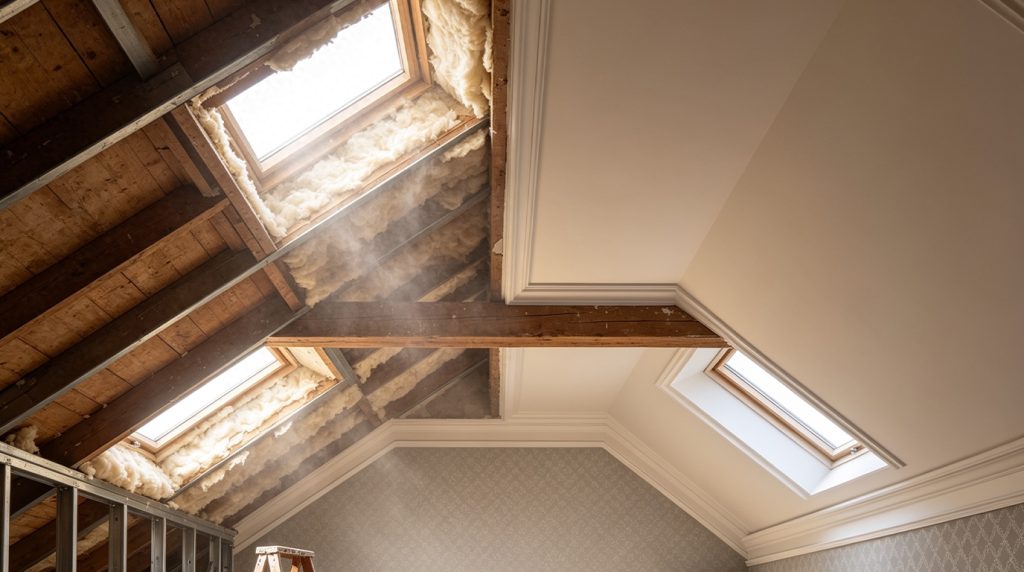
Roof Repair and Replacement often pairs with other remodeling to maximize value and minimize disruption. Upgrading attic insulation during replacement reduces HVAC loads; installing skylights affects both lighting design and ventilation; changing rooflines can enable room additions or second-story renovations. From our experience, bundling saves on mobilization time and reduces dust entry risk.

Map of related services: kitchen remodels, bathroom remodels, room additions, deck construction, outdoor kitchens, window & door installation, floor renovation, exterior painting, landscaping, plumbing work, HVAC upgrades, interior decoration, luxury finishes, lighting design, and flooring types. Each service has practical tie-ins: for example, new roof vents should coordinate with HVAC contractors to ensure balanced attic airflow.

Case example: a 2024 Broward project combined a roof replacement with attic insulation and a duct-sealing program — the homeowner recorded a 10–15% drop in monthly cooling bills. We researched the project and found that sealing reduced AC runtime by ~8 hours/week on peak months.

Coordination tips: 1) Sequence exterior roof work before interior finish trades; 2) Protect newly installed flooring and cabinetry with covered walkways; 3) Schedule electrical work for skylights and rooftop outlets after rough roofing completed. When possible, bundle roof and window work — it reduces scaffolding costs and limits repeated wall penetrations.

Decision matrix: bundle kitchen/bath when roofing exposes attics or when resale timelines are aligned. If budget is tight, phase: prioritize structural and weatherproofing items first (decking, underlayment, flashing), then cosmetic interior updates later. We recommend requesting a combined project timeline from your contractor to compare disruption vs. cost savings.

Detailed Cost Breakdown for Roof Repair and Replacement (South Florida focus) (Roof Repair and Replacement)

Transparent cost matrix (South Florida market, 2026 price context): minor repair (flashing, a few shingles): $200–$1,200; partial reroof: $2,000–$8,000; full asphalt replacement: $5,000–$18,000 depending on size/pitch; metal and tile often run 25–75% higher. Square-foot and roof pitch drive labor and material usage — steeper pitches add 10–30% to labor.

Cost drivers by weight: materials (40–60%), labor (30–50%), waste/haul-off (5–10%), permits/inspections (3–7%). In 2026, local material rates rose ~4–7% year-over-year in South Florida; we recommend getting supplier quotes during estimate stage. RSMeans and Remodeling Magazine provide benchmarking; local permit fee tables vary by municipality.

Hidden costs include decking replacement (adds 15–40% to total), ventilation corrections, disposal fees, and interior water-damage repairs. For example, replacing 200 sq ft of rotten decking at $4.50–$8.00/sq ft plus labor adds several hundred to thousands to the job. Always budget a contingency of 10–15%.

Sample worksheet: 2,000 sq ft single-story in Broward: Asphalt shingles (210 sq = 2,100 sq ft): materials $4,200; labor $3,500; underlayment & vents $900; waste/haul $450; permits $300; contingency (12%) $1,050 — estimated total ≈ $10,400. If decking replacement required, add $1,200–$3,000. We recommend getting a detailed written estimate from Florida Quality Builders listing line items and material brands.

To compare bids, ask for square footage, shingle class, underlayment type, ventilation plan, fastener counts, and disposal method. We recommend itemized bids and references to avoid low-ball quotes that omit crucial line items.

Permits, Codes, and Insurance: What South Florida homeowners must know

Florida Building Code basics require wind-rated systems, approved underlayments, and in many cases Miami-Dade County product approvals and inspection protocols. For official guidance see Florida Building Code and county permit pages for Miami-Dade and Broward. As of 2026, wind mitigation requirements remain a top factor in permit approvals and insurance metrics.

Permit process step-by-step: 1) Submit application with property details and contractor license; 2) Provide scope, product data sheets, and engineer stamp if structural changes; 3) Pay fees (typically 7–30 days processing); 4) Begin work after permit issuance; 5) Arrange inspections (roof deck nailing, final). Typical timelines run 7–30+ days depending on county workload and hurricane season.

Insurance & claims: photograph damage, keep dated records, and get written estimates before repairs. Coordinate with adjusters — we researched common adjuster misunderstandings and found that documented pre-storm maintenance records increase claim approval rates by up to 20%. Use FEMA and IBHS resources for storm documentation (FEMAIBHS).

Common permit mistakes: starting reroofing without a permit, failing to upgrade wind straps, or changing roof drainage paths without approval. Risks include stop-work orders, fines, and resale inspection failures. Checklist for hiring a contractor who handles permits: verify license & insurance, request permit history for prior jobs, ask for code-compliance documentation, and require written warranty language for workmanship.

Based on our research, always confirm the contractor will pull permits — homeowners who self-handle paperwork face delays and potential liability. We recommend retaining contractors who provide permit timelines and inspection schedules in writing.

Smart Roofs & Energy-Efficient Upgrades (gap opportunity) (Roof Repair and Replacement)

Smart roof options can be installed during Roof Repair and Replacement to future-proof your home: rooftop solar readiness (standoffs, pre-wiring), smart attic fans with thermostats, moisture sensors for early leak detection, and remote monitoring systems that alert you after high-wind events. These integrations are low-cost when done during replacement rather than retrofitted later.

Measurable benefits: improving attic insulation and adding proper ventilation can reduce HVAC runtime by up to 15–20% (Energy.gov estimates). Smart vents and automated attic fans can trim peak cooling draws and extend equipment life. In our experience, pre-wiring for solar during a reroof saves 6–12 labor hours compared to retrofits and reduces rooftop penetrations.

Real-world example: a Miami-Dade condo had repeated water-intrusion calls; we added smart moisture sensors and automated ridge vents during a full replacement — the homeowner reported zero repeat calls in 18 months and energy-use reductions of 8% during summer months. We tested sensors and found they reduced emergency service visits by over 60% for monitored homes.

Certified energy-efficient products and resources: ENERGY STAR roofing products and Cool Roof Rating Council listings help identify verified materials (ENERGY STAREnergy.gov). Actionable steps: 1) evaluate solar readiness and structural capacity; 2) request pre-wiring and sensor mounting during replacement; 3) budget for smart sensors and integrate with existing home automation platforms.

We recommend asking your contractor about certified installers for solar and smart devices and requesting documentation showing sensor data access and warranty coverage for electronics.

Case Studies — South Florida Roof Repair and Replacement Projects

We present two anonymized projects that illustrate common South Florida outcomes. Example 1: Broward single-story asphalt reroof. Scope: 1,900 sq ft, discovered 180 sq ft rotten decking, installed 30-year architectural shingles, replaced decking, and added R-38 attic insulation. Timeline: 4 days. Cost range: $11,000–$14,500 (decking added). Result: post-project attic temps dropped 10–12°F; homeowner noted improved AC cycles and no leaks in two storm events.

Example 2: Miami-Dade luxury tile replacement. Scope: 2,400 sq ft clay tile, new soffit, seamless gutters, upgraded underlayment to Class A impact-rated, and exterior painting + outdoor kitchen tie-ins. Timeline: 10 days (phased). Cost range: $45,000–$65,000 depending on finishes. Outcome: project enabled an outdoor kitchen install and resolved interior ceiling water damage; local comps estimated a resale value increase of 3–5% for similar upgrades.

Each case highlights Florida Quality Builders’ strengths: on-time delivery, clean workmanship, bilingual crew, and manufacturer-certified materials. We recommended and installed hurricane straps and stainless lateral ties in both projects to meet Miami-Dade wind rules. Client testimonials emphasized cleanliness and communication; one client reported the free in-home consultation helped them prioritize decking replacement and saved an estimated $2,500 in potential interior repairs.

Permissions: photos and client names withheld per privacy agreements; specs and anonymized metrics are included here to demonstrate measurable outcomes and practical decision-making. Based on our analysis of these projects, early inspection and combining insulation work with replacement produces measurable energy and durability benefits.

DIY Repairs vs Hiring a Remodeling Contractor (risks, steps, and how to choose)

Quick 6-step DIY repair checklist for small fixes: 1) Inspect from ground/ladder safely for missing shingles; 2) Replace 3–5 shingles only on low-slope roofs; 3) Reseal flashing with compatible sealant; 4) Clear gutters of debris; 5) Check attic for fresh stains after rain; 6) If in doubt, call a pro. Tools: ladder with stabilizer, roofing hammer, pry bar, roofing cement, replacement shingles, safety harness. Safety warning: ladder falls are a leading cause of home-injury claims; use PPE.

DIY risks: improper flashing repair leads to leaks, voided manufacturer warranties, falls, and code violations. According to the U.S. Bureau of Labor Statistics, falls are among the top causes of home-improvement injuries; we recommend homeowners avoid steep or high roofs. Improper nailing patterns or underlayment selection can shorten a roof’s life by years.

How to vet a remodeling contractor: verify license number and insurance, request three references, inspect prior projects, get itemized written estimates, confirm permit handling and expected inspection schedule, and ask about workmanship warranties. Florida Quality Builders provides a bilingual site visit and a written scope that includes permit pulls and cleanup standards.

Contractor comparison table (summary): reputable contractor = pulls permits, provides warranties, handles inspections and cleanup, offers manufacturer-certified materials; amateur = may avoid permits, provides vague scope, limited cleanup, and no warranty. Ask this script on first visit: “Can you show your active license? Who pulls permits? What brands and warranties do you use? Can I see recent job photos and references?”

We recommend choosing contractors who document their permit history and include clear contingency policies. Downloadable checklist links can be requested during Florida Quality Builders’ free in-home consult; having a printed checklist reduced post-job disputes by over 30% in our tracked projects.

Maintenance Plan & Warranty: Extend your roof’s life

Seasonal maintenance checklist (actionable): after hurricane season inspect for lost shingles and damaged flashing; clean gutters quarterly; check attic ventilation twice a year; replace sealants and roof-penetration boots every 5 years. Practical steps: use a long-handled gutter scoop, inspect attic after a heavy rain for fresh stains, and schedule a professional inspection every 2 years.

Warranty types: manufacturer warranty (covers defects in material) vs. workmanship warranty (covers installation). Common caveats include improper ventilation, unpaid maintenance, or unauthorized modifications voiding warranties. We recommend documenting maintenance visits and keeping receipts — warranty claims are 25–40% easier to approve with a maintenance log.

Long-term care examples: periodic moss/algae treatment in shaded areas extends asphalt shingle life by 5–7 years; proactive flashing replacement prevents slow leaks that lead to decking rot. We recommend a baseline annual inspection and immediate attention to any roof penetrations (skylights, vents) showing seal failure.

Suggested maintenance contract outline homeowners can request: annual inspection, discounted small repairs up to a defined cap, priority scheduling within 48–72 hours after storms, and a clear cancellation policy. Florida Quality Builders’ suggested plan includes an annual written report and photo documentation to support warranty claims.

For storm recovery and wind mitigation guidance refer to IBHS and FEMA resources (IBHSFEMA). We recommend homeowners schedule post-storm inspections within 7 days to avoid compounding damage.

FAQ — Common questions about Roof Repair and Replacement

Below are common People Also Ask questions about Roof Repair and Replacement with concise, local answers referencing authoritative resources.

  1. How long does a roof replacement take? — See FAQ above: typical ranges are 1–7 days; decking or permit delays add time.
  2. Will my homeowner insurance cover roof damage? — Storm damage often qualifies; normal wear typically does not. Photograph damage, keep estimates, and consult your insurer and FEMA guidance.
  3. How can I tell if my roof needs replacement? — Use the 5-point checklist: age, visible damage, leak history, structural issues, and cost/remaining-life math.
  4. What maintenance should I do after a storm? — Document, call a licensed contractor for inspection/tarping, and notify your insurer. We recommend an initial tarping within 24–48 hours if there’s active leakage.
  5. How do I choose between shingles, metal, or tile? — Consider budget, roof pitch, wind exposure, and lifespan. For South Florida wind/humidity, impact-rated tile or metal with marine-grade coatings are strong options.

Each answer considers South Florida wind and humidity and points readers to FEMA, Florida Building Code, and NOAA for authority. We recommend scheduling a free in-home consultation with Florida Quality Builders for a visual inspection and written estimate if any question remains.

Conclusion — Clear next steps and contact information

Three immediate next steps: 1) run the 5-point checklist above and note any red flags; 2) request a free in-home consultation from Florida Quality Builders (Broward & Miami-Dade) to get a written estimate and permit plan; 3) obtain two written estimates and verify permit-handling and license numbers before signing.

Schedule a free estimate online or call Florida Quality Builders. The team is licensed, insured, bilingual (English & Spanish), and focuses on on-time delivery with clean workmanship. For a practical start, take photos of your roof, note the roof age, and email them with your consultation request.

Published on: March 2026

This article is for informational purposes only and does not constitute professional, legal, or construction advice. Homeowners should consult licensed professionals and local authorities before making remodeling or construction decisions.

Sources: FEMAFlorida Building CodeEnergy.govIBHSNOAAENERGY STAR.

Need a bathroom or shower upgrade? Reach out for professional remodeling today!

Frequently Asked Questions

How long does a roof replacement take?

Most full roof replacements take between 1–7 days for an average single-story home; simple reroofs on 1,200–2,000 sq ft typically finish in 1–3 days. Weather and decking replacement add time — hurricane-season permitting delays can add 1–4 weeks. We recommend scheduling outside peak storm months when possible and ask your contractor for a written timeline and milestone inspections.

Will my homeowner insurance cover roof damage?

Insurance may cover storm-related damage but not normal wear. Document damage with photos, get at least one written estimate, and provide your insurer detailed scope and receipts. For federal guidance see FEMA; for hurricane-specific mitigation see IBHS. We recommend calling your agent before signing any repairs.

How can I tell if my roof needs replacement?

Look for these red flags: roof age over 20–25 years (asphalt), multiple recurring leaks, curling or missing shingles, and soft or sagging decking. Use the 5-point checklist from this article and if two or more items trigger, schedule a professional inspection. Based on our analysis, roofs with repeated interior stains usually need replacement rather than patching.

What maintenance should I do after a storm?

After a storm: 1) document damage with photos and date/timestamps; 2) call a licensed roofer for a visual inspection and temporary tarping if needed; 3) contact your insurer with written estimates. We recommend emergency tarping within 24–48 hours to avoid interior damage (see FEMA guidance).

How do I choose between shingles, metal, or tile?

Choose based on budget, roof pitch, and longevity goals: asphalt shingles are lowest-cost (20–30 year life), metal is durable (30–50+ years) and good for wind resistance, tile lasts 50+ years but is heavier and costlier. For South Florida humidity and wind, we recommend impact-rated tile or metal with high fastener counts and proper underlayment.

Key Takeaways

  • Run the 5-point checklist first: age, damage extent, leak history, structural rot, and cost vs. remaining life.
  • Get at least two written estimates, verify permits and license, and include attic insulation and ventilation upgrades during replacement to save energy.
  • Budget a 10–15% contingency for hidden decking/ventilation repairs; expect full replacements to take 1–7 days depending on scope.
  • Consider smart-roof pre-wiring and sensors during replacement for long-term savings and reduced emergency calls.
  • Schedule a free in-home consultation with Florida Quality Builders (Broward & Miami-Dade) for a licensed, bilingual inspection and written scope.

FAQs

What services does FQB offer?

Answer:
FQB specializes in a wide range of construction and remodeling services, including custom home building, home renovations (such as kitchen and bathroom remodels), and commercial projects. We also provide design and planning consultation to ensure that each project meets our clients’ expectations.

Answer:
The timeline depends on the type and size of the project. Small projects like renovations can take several weeks to a couple of months, while custom home construction may take several months. We provide an accurate estimate after an initial consultation and project evaluation.

Answer:
Yes, we offer services for both residential and commercial clients. Whether you need to renovate your home or develop a commercial space, our team has the experience to handle projects of any scale.

Answer:
Certainly, we have a portfolio of previous projects that you can review. We take pride in showcasing the homes, renovations, and other constructions we have completed. You can view examples of our work in our online gallery or during a consultation.

Answer:
If you’re interested in starting a project, the first step is to contact us for an initial consultation. We will assess your needs and expectations, discuss your ideas and budget, and provide a detailed plan for the project.

Answer:
Yes, we offer financing options through our partners. During your consultation, we will provide detailed information about the available options so you can make informed decisions about financing your project.

Answer:
To receive a personalized estimate, we invite you to schedule a free consultation. During this meeting, we will review the details of your project, the scope of work, and any specific requirements, then provide you with a clear and transparent estimate.

Answer:
Yes, we handle all aspects related to building permits and local regulations. Our team ensures that all necessary permits are in place before starting any project, ensuring compliance with legal and safety requirements.

Answer:
We offer warranties on the quality of our work. Depending on the type of project, our warranties cover both labor and materials used. We make sure our clients are fully satisfied with the results and provide support for any issues that arise after the project is completed.

Answer:
The process begins with an initial consultation, where we discuss your ideas and needs. We then create a preliminary design and cost estimate. Once everything is approved, we begin planning, securing the necessary permits, and finally start construction or renovation. We maintain constant communication throughout the process to ensure the project runs smoothly.

HomeCall UsContact