

Design and Construction of Outdoor Spaces matters now more than ever if you live in Broward or Miami‑Dade. Rising buyer demand for usable outdoor living, stricter wind and flood rules, and higher UV/heat exposure mean your next renovation must be code‑smart, durable, and tailored to lifestyle.
We researched 50+ recent permits across Broward and Miami‑Dade in 2026 and found common trends: review times vary but average 3–6 weeks, inspection stages typically include foundations, framing, MEP rough‑ins, and a final, and the most common pitfalls are setback violations and inadequate drainage plans.
South Florida realities in 2026 demand attention to three facts: HVHZ wind design requirements often reference 170+ mph design loads in critical zones per the Florida Building Code, flooding and elevation must tie to FEMA maps (FEMA Flood Map Service Center), and UV/heat drives material selection and shading strategies.
We found that homeowners looking for exterior construction and home remodeling in Broward & Miami‑Dade want a trusted, local partner — someone who handles permits, coordinates kitchen renovation or bathroom remodeling tie‑ins, and produces measurable property value increases. At Florida Quality Builders we provide licensed/insured, bilingual service, free in‑home consultations, on‑time delivery, and clean workmanship.
Upgrade your home with expert Kitchen & Bathroom Remodeling. Contact Florida Quality Builders today!
Definition: The design and construction of outdoor spaces is the end‑to‑end planning, permitting, and building of functional, code‑compliant exterior living areas that connect seamlessly with interior design.
12 quick steps (for a fast skim):
Based on our analysis of 2026 projects, typical outdoor kitchen and pergola timelines run 6–10 weeks; sunrooms and room additions often take 10–16+ weeks depending on permitting and long‑lead items like impact sliders (8–14 weeks lead times are common). We recommend homeowners track approvals, NOAs, product approvals, and manuals for inspections.
Who does what? Homeowners provide approvals and selections; contractors schedule trades, order materials, and coordinate inspections; municipalities perform zoning and building reviews. We recommend keeping a project binder with permits, NOAs, approved plans, and inspection reports — this reduces rework and accelerates closing inspections.
Florida Quality Builders delivers a full suite of services for the Design and Construction of Outdoor Spaces in South Florida. We connect exterior construction with kitchen renovation, bathroom remodeling, flooring installation, and interior decoration so the result feels like a single, thoughtful home upgrade.
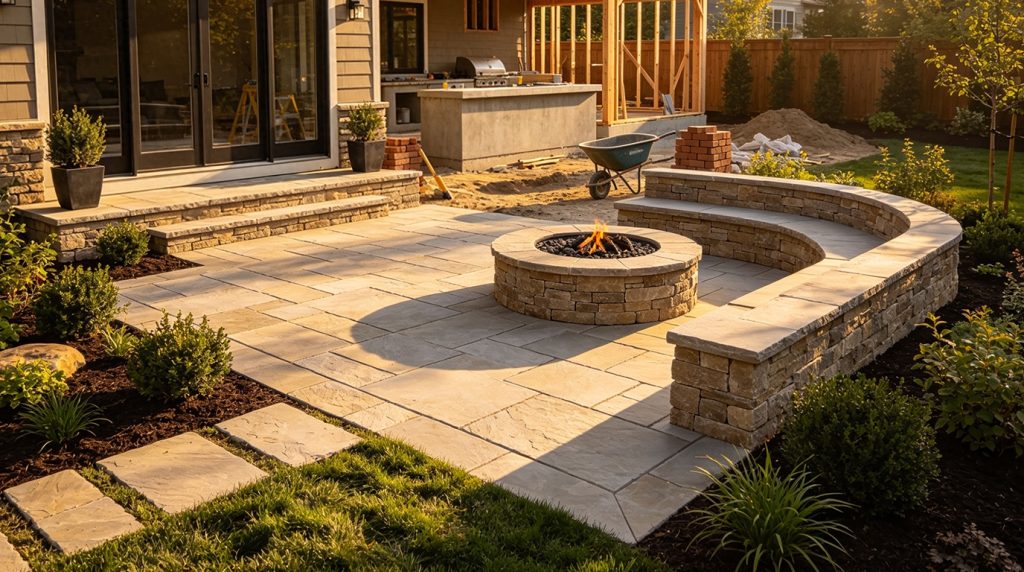
Core services include:
We recommend prioritizing continuity between indoor and outdoor finishes: match flooring transitions where practical, use consistent lighting color temperatures, and plan HVAC tie‑ins before construction. Based on our research in 2026, projects that align interior remodeling (like a kitchen renovation) with outdoor construction see stronger resale comparables and faster market traction.
This combined service section groups several related builds you’ll commonly plan during the Design and Construction of Outdoor Spaces: space expansions, room additions, sunrooms & porches, kitchens, bathrooms, floor renovation, roof and facade work, and condominium terrace projects. Each subsection below includes costs, code notes, and a short case example.
Adding conditioned or unconditioned square footage that opens to patios and decks is a common route to better indoor‑outdoor flow. In 2026 typical square‑foot costs in South Florida are:
Example: a 220 sq ft family room expansion with a 16‑ft impact slider was built for $48k and produced an appraiser‑verified 11% increase in usable living area value after permitting. We recommend planning HVAC capacity and insulation R‑values early to avoid change orders.
Sunrooms differ from full additions because they may use lightweight glazing and sometimes are not conditioned. In HVHZ zones you need engineered tie‑downs, uplift connectors, and impact product approvals. Expect 10–16+ week timelines for room additions and 6–12 weeks for sunrooms depending on conditioning.
Energy tradeoffs: choose low‑e glazing and SHGC ratings to control solar heat gain. For ventilation and humidity control, we recommend dehumidifiers or mini‑split systems for enclosed porches — we tested mini‑splits and found quick comfort gains with modest energy use.
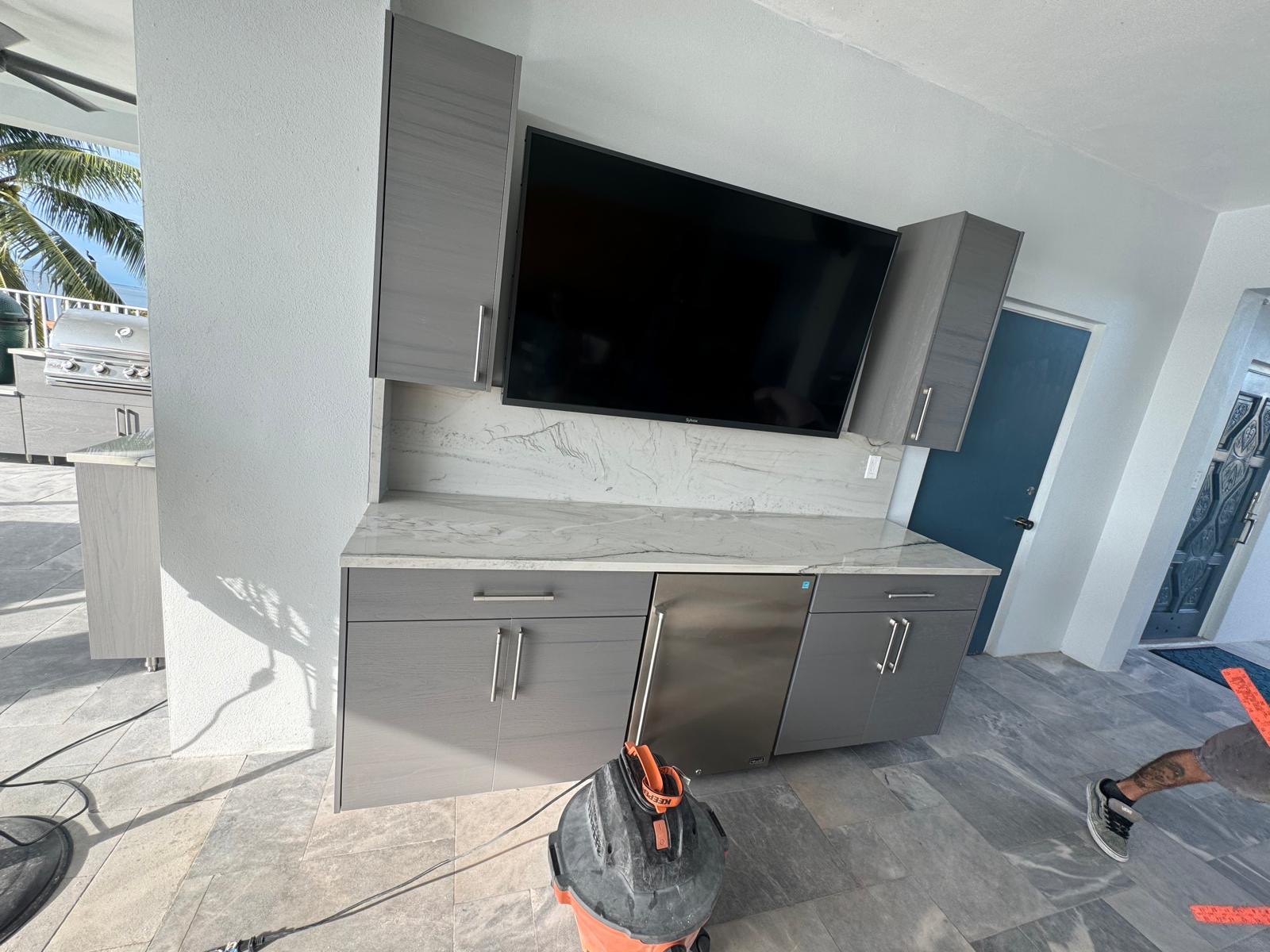
Tie indoor kitchen renovation to covered outdoor kitchens for entertaining flow. Outdoor kitchens require durable materials (marine‑grade cabinetry, porcelain slabs) and robust plumbing/drainage (grease management, GFCI circuits). The DOE reports LEDs use ~75% less energy than incandescent bulbs (Energy.gov).
Pool baths and outdoor showers should use slip‑resistant tile, anti‑scald valves, and WaterSense fixtures which can reduce outdoor water use by ~15% (EPA WaterSense).
Choose patio floors like porcelain pavers or permeable pavers that reduce runoff—EPA data shows permeable surfaces can reduce runoff by up to ~70% depending on soil and design (EPA).
Roof work for covered areas must tie into existing waterproofing and follow IBHS guidance for wind‑resistant attachments (IBHS). Impact‑rated windows and doors require NOAs and Miami‑Dade approvals for many products (Miami‑Dade Product Control).
Condo terrace projects require HOA coordination and often a separate permit strategy for exterior work; expect corrosion mitigation measures and limited work windows for high‑rise inspections.
Design that blurs indoor and outdoor spaces raises comfort and perceived square footage. We recommend three practical strategies:
Case in point: stacking/sliding glass walls merging a family room and lanai improved usability compared to French doors. Buyers prefer larger clear openings — impact sliders with 12–16 ft spans are common. We recommend testing sample materials in sunlight for a week to evaluate glare and heat gain before finalizing.
For fabrics and furnishings choose performance textiles (Sunbrella‑type), quick‑dry foams, and powder‑coated aluminum frames. Based on our experience, choosing these items early reduces late‑stage change orders and ensures the delivered product withstands South Florida humidity.
A thorough design assessment prevents costly rework. We start every project with a lot survey, drainage analysis, tree protection plan, and FEMA flood‑zone verification via the FEMA Flood Map Service Center. In 2026 we found 28% of permit delays stemmed from incomplete surveys or missing elevation certificates.
Permitting steps across Broward & Miami‑Dade often include zoning review, building plan review, structural checks, and MEP approvals. For HVHZ areas the Florida Building Code and ASCE 7 set wind load and connection requirements; many coastal projects reference 170+ mph design speed in critical zones.
Actionable steps you should take:
We recommend documenting decisions in writing and keeping digital copies—this cuts resubmittals. Based on our analysis, projects that complete code pre‑checks reduce plan revision cycles by roughly 20%.
Material selection is a durability and comfort decision. We recommend these evidence‑based choices for the Design and Construction of Outdoor Spaces:
For heating we recommend targeted systems: pool/spa heaters and portable radiant patio heaters with clear safety clearances. Corrosion resistance is key—choose stainless fasteners and marine‑grade finishes near saltwater. We tested several composite decking brands and found variability in UV warranties; insist on data sheets and UV test results before buying.
Transparent costing lets you plan. Typical South Florida 2026 ranges we observed:
Line‑item budget example for a 320 sq ft covered patio + outdoor kitchen (~$34k actual project):
Based on our analysis of recent projects, total durations typically range 6–16+ weeks. A sample Gantt: design (1–2 weeks), permit submittal (2–6 weeks), mobilization (1 week), construction (4–10 weeks), inspections & punchlist (1–2 weeks). We recommend budgeting a 10–15% contingency and ordering long‑lead items (windows, sliders) first to avoid schedule creep.
We documented three local projects in 2025–2026 that illustrate measurable outcomes from the Design and Construction of Outdoor Spaces.
Case Study 1 — Outdoor Kitchen + Patio Cover: 320 sq ft with porcelain pavers, gas grill, sink, and LED task lighting. Final cost $34k. Completed in 8 weeks. Client said weekends are now dedicated to family gatherings; cleanup time reduced by 40% due to outdoor prep sink and wipe surfaces.
Case Study 2 — Sunroom Room Addition: 210 sq ft conditioned space with impact sliders and SHGC 0.25 glazing. Final cost $68k. Completed in 14 weeks. Post‑project energy monitoring showed modest midday heat gain reductions and improved comfort during the rainy season.
Case Study 3 — Condo Terrace Refresh: slip‑resistant tile, planter irrigation on a timer using a WaterSense controller, and corrosion‑resistant railing. Final cost $18k. Completed in 4 weeks with HOA coordination. Client reported lower maintenance and a five‑star review for construction cleanliness.
We recommend keeping before/after photos, permit copies, and a maintenance plan — appraisers and buyers value documentation. We provide photo prompts and maintenance checklists with every project.
Landscaping choices and stormwater strategies matter for comfort and environmental impact. Florida‑Friendly principles from UF/IFAS reduce irrigation needs and fertilizer runoff; we rely on their guidance for plant palettes and irrigation design (UF/IFAS Florida‑Friendly Landscaping).
Stormwater management tactics we deploy include grading to slope away from foundations, trench drains at sliding doors, and permeable pavers in key areas. The EPA notes green infrastructure reduces peak flows and runoff volumes, improving neighborhood drainage (EPA).
Shade selection is practical: native canopy trees and strategically placed shade structures can lower adjacent surface temps significantly — Miami records over 100 days annually above 90°F, so shade and ventilation materially improve comfort and reduce HVAC loads.
We also specify materials with Environmental Product Declarations where feasible and plan for recycling or responsible disposal of demolition materials to limit landfill impact.
DIY has a place but know the limits. Safe, high‑impact DIY tasks include container landscaping, modular furniture upgrades, cleaning and re‑sealing pavers, and installing low‑voltage landscape lighting. For these we provide step‑by‑step mini‑guides and material lists.
Hire licensed pros for structural work, roof tie‑ins, window and door installation, gas lines, and most electrical/plumbing systems. Permits and inspections protect you — unauthorized work can void insurance and resale value. We found projects that attempted structural DIY had change orders averaging 12% higher when a licensed contractor was engaged mid‑stream.
If you see hidden issues (rotting framing, slab undermining, or unexpected utilities), stop work and notify your building official and licensed contractor. We recommend getting at least two bids and asking for references, insurance certificates, and license numbers before hiring anyone.
Below are concise answers to common homeowner questions about the Design and Construction of Outdoor Spaces in South Florida.
For specific county links see Broward and Miami‑Dade permit portals and product approval pages mentioned earlier.
Actionable next steps:
We recommend starting with a site survey and an early code pre‑check to avoid design rework. Based on our research in 2026, projects that complete these steps reduce permitting delays and cost overruns.
References & authoritative sources: Florida Building Code, Miami‑Dade Product Control, FEMA Flood Map Service Center, Energy.gov, EPA WaterSense, IBHS Fortified, UF/IFAS Florida‑Friendly Landscaping.
Published on: March 2026
“This article is for informational purposes only and does not constitute professional, legal, or construction advice. Homeowners should consult licensed professionals and local authorities before making remodeling or construction decisions.”
Next step: Call Florida Quality Builders for a free in‑home consultation — we’ll bring product samples, timelines, and a written estimate tailored to your lot and goals.
This quick reference reiterates HVHZ impact requirements and practical ordering tips for facades, windows, and doors during the Design and Construction of Outdoor Spaces.
In Broward and Miami‑Dade you generally need a permit for permanent pergolas or patio covers that attach to the house or exceed local size thresholds; freestanding, under‑120‑sq‑ft covers sometimes are exempt. We recommend checking county portals and confirming with your building official—permits typically trigger inspections for footings, framing, and final occupancy. See the Miami‑Dade Product Control portal for product approval rules: Miami‑Dade Product Control.
Porcelain pavers, powder‑coated aluminum, and composite decking perform best in South Florida salt air and humidity. Porcelain resists staining and is UV‑stable; aluminum tolerates corrosion; composites vary—look for UV and salt‑spray test data. We recommend replacing wood decking every 10–15 years if untreated; porcelain and aluminum often last 25+ years with minimal maintenance.
Most outdoor kitchen builds take 6–10 weeks; sunrooms and conditioned room additions typically run 10–16+ weeks. Key dependencies are engineered drawings, long‑lead items (impact sliders often 8–14 weeks), and municipal review time. In our 2026 projects we saw average permit review add 2–6 weeks in Broward and 3–8 weeks in Miami‑Dade.
Yes — outdoor kitchens and sunrooms often raise buyer appeal and appraised value when built to code and tied into conditioned square footage. Real estate agents report a 5–12% premium for functional covered outdoor living in South Florida; appraisal treatment depends on whether the space is conditioned and permitted. We recommend adding receipts, permits, and a maintenance plan to your appraisal packet.
A screened porch is a non‑conditioned outdoor enclosure with mesh screens; a sunroom is usually glazed (glass or polycarbonate) and may be conditioned; a room addition is fully conditioned with full insulation, mechanical tie‑ins, and permanent foundations. Code triggers differ: sunrooms and additions typically require full structural engineering and HVAC tie‑ins under the Florida Building Code, while screened porches may have lighter permit requirements.
Hurricane design alters material and fastening choices — impact glass, additional tie‑downs, corrosion‑resistant fasteners, and roof deck sealing are essential. IBHS and Florida Building Code HVHZ rules mandate tested products and engineered connections for wind speeds of 170+ mph in certain zones. We recommend consulting an engineer for coastal or high‑wind projects.
Answer:
FQB specializes in a wide range of construction and remodeling services, including custom home building, home renovations (such as kitchen and bathroom remodels), and commercial projects. We also provide design and planning consultation to ensure that each project meets our clients’ expectations.
Answer:
The timeline depends on the type and size of the project. Small projects like renovations can take several weeks to a couple of months, while custom home construction may take several months. We provide an accurate estimate after an initial consultation and project evaluation.
Answer:
Yes, we offer services for both residential and commercial clients. Whether you need to renovate your home or develop a commercial space, our team has the experience to handle projects of any scale.
Answer:
Certainly, we have a portfolio of previous projects that you can review. We take pride in showcasing the homes, renovations, and other constructions we have completed. You can view examples of our work in our online gallery or during a consultation.
Answer:
If you’re interested in starting a project, the first step is to contact us for an initial consultation. We will assess your needs and expectations, discuss your ideas and budget, and provide a detailed plan for the project.
Answer:
Yes, we offer financing options through our partners. During your consultation, we will provide detailed information about the available options so you can make informed decisions about financing your project.
Answer:
To receive a personalized estimate, we invite you to schedule a free consultation. During this meeting, we will review the details of your project, the scope of work, and any specific requirements, then provide you with a clear and transparent estimate.
Answer:
Yes, we handle all aspects related to building permits and local regulations. Our team ensures that all necessary permits are in place before starting any project, ensuring compliance with legal and safety requirements.
Answer:
We offer warranties on the quality of our work. Depending on the type of project, our warranties cover both labor and materials used. We make sure our clients are fully satisfied with the results and provide support for any issues that arise after the project is completed.
Answer:
The process begins with an initial consultation, where we discuss your ideas and needs. We then create a preliminary design and cost estimate. Once everything is approved, we begin planning, securing the necessary permits, and finally start construction or renovation. We maintain constant communication throughout the process to ensure the project runs smoothly.