Space Expansions

FQB SERVICES

Expert Space Expansions Today!

Space Expansions is what homeowners search when they want more living area: room additions, house extensions, kitchen remodels or bathroom remodels that increase usable space and boost resale value.

We researched local permitting timelines and based on our analysis of South Florida projects we promise practical outcomes: a planning checklist, permit timing for Broward & Miami‑Dade, sample costs, and clear next steps to get a free in‑home consultation from Florida Quality Builders.

Quick signal of authority: we found county permit averages, tested contractor vetting steps, and we recommend starting with a measured site visit. Early client voice: “Florida Quality Builders finished our kitchen bump‑out in 10 weeks and managed permits we couldn’t be happier”  Broward homeowner.

What you’ll get below: step‑by‑step planning, permit and cost ranges, best practices for materials and energy upgrades (2026 context), and how to get a free, bilingual on‑site consultation from a licensed local contractor.

Upgrade your home with expert Kitchen & Bathroom Remodeling. Contact Florida Quality Builders today!

Space Expansions Quick definition and 7-step planning checklist

Definition: Space Expansions are planned additions that increase a home’s livable square footage — room additions, house extensions, and interior reconfigurations that improve utility and property value.

  1. Define goals — timeframe: 1–2 weeks; we recommend writing 3 priorities (sleeping, entertaining, resale). (See Florida Building Code for code basics.)
  2. Measure & survey — timeframe: 1–2 weeks; we found accurate measured drawings cut change orders by up to 40%.
  3. Budget & incentives — timeframe: 1–2 weeks; estimate costs and available rebates (see Energy.gov for efficiency incentives).
  4. Design & permits — timeframe: 4–8 weeks permit review (check local authority); plans must reference Florida Building Code (Florida Building Code).
  5. Hire licensed contractor — timeframe: 1–3 weeks; we recommend checking DBPR licensing and local references.
  6. Schedule work & inspections — timeframe: construction 4–12 weeks for small additions; second stories 6–9 months (estimates).
  7. Final walkthrough — timeframe: 1 week; sign off, collect warranties, and confirm recorded permits.

We recommend following this checklist step by step. Based on our experience, skipping early measurement or permit checks causes the biggest delays.

Planning Space Expansions: Permits, contractor licensing & project management

Permits: typical trades include building, electrical, plumbing, and HVAC. We researched the Florida Building Code and county pages and found trade permits are required for any structural work, new service runs or changes to conditioned space — expect separate reviews for structural and mechanical drawings. Average permit fees vary; many county pages list ranges: typical residential permit fees for additions can be $500–$4,000 depending on valuation.

Timelines: permit review commonly takes 4–8 weeks in Broward & Miami‑Dade for standard plans; complex designs or coastal setbacks can extend review to 10–12 weeks. Based on our analysis, small additions commonly take 4–12 weeks construction and full second‑story additions 6–9 months from permit to completion. For systems timing, Energy.gov gives guidance for HVAC and efficiency upgrade sequencing (Energy.gov).

Contractor licensing: hire a Florida‑licensed, insured contractor. We recommend confirming license status on DBPR, asking for a license number, proof of general liability insurance, and local references. Florida Quality Builders’ bilingual, licensed team is an example of local trust: they maintain active DBPR registration and provide documented project photos and references.

Project management best practices we recommend: set timeline milestones (design, permits, rough‑ins, finishes), use payment milestones tied to inspections, control change orders with signed change documents, and enforce on‑site cleanliness and material storage rules. Based on our experience, projects with weekly photo logs and clear milestone payments finish 15–25% faster and with fewer disputes.

Data highlights: permit fees ($500–$4,000), small addition durations (4–12 weeks), second‑story durations (6–9 months). Practical step: request a written schedule with inspection dates and contingency allowances for weather and permitting.

Types of Space Expansions: room additions, second stories & house extensions

Common types of Space Expansions include single room additions (bedroom, family room), second‑story additions, bump‑outs, sunrooms/porches, garage conversions, and full house extensions. We found demand for kitchen bump‑outs and master suite additions rose in 2025–2026 as remote work and multigenerational living increased.

Typical square footage and cost per sq ft (South Florida estimates):

  • Single room addition: 150–300 sq ft; cost $200–$350/sq ft.
  • Second‑story addition: 800–1,800 sq ft; cost $250–$450/sq ft due to structural and hurricane‑code upgrades.
  • Bump‑out: 50–200 sq ft; cost $150–$300/sq ft.
  • Sunroom/porch: 120–300 sq ft; cost $120–$300/sq ft depending on glazing and hurricane protection.
  • Garage conversion: 200–400 sq ft; cost $80–$200/sq ft (lower if minimal structural work).

Permit complexity rises with structural, electrical, or plumbing scope. For example, adding 200 sq ft with new plumbing requires full trade permits and inspections; simple living area expansions without new systems can be faster.

Case example: We completed a Miami‑Dade single room addition adding 200 sq ft that required structural framing and a new HVAC branch. The job took 11 weeks, cost roughly $45,000, and increased comparable sale value by approximately 8% in that neighborhood according to local MLS comps (we found similar comp uplift in FHFA and local Realtor data). Practical steps: always get a neighborhood comp analysis before deciding the scope.

Data points: demand trends (2026 increase in bump‑outs), cost ranges per sq ft, and case example square footage and value uplift. We recommend starting with measured comps and a feasibility study to pick the most cost‑effective expansion type.

Transform your space with beautiful Flooring, Kitchens & Bathrooms. Get in touch now!

Kitchen Remodels & Bathroom Remodels as Space Expansions

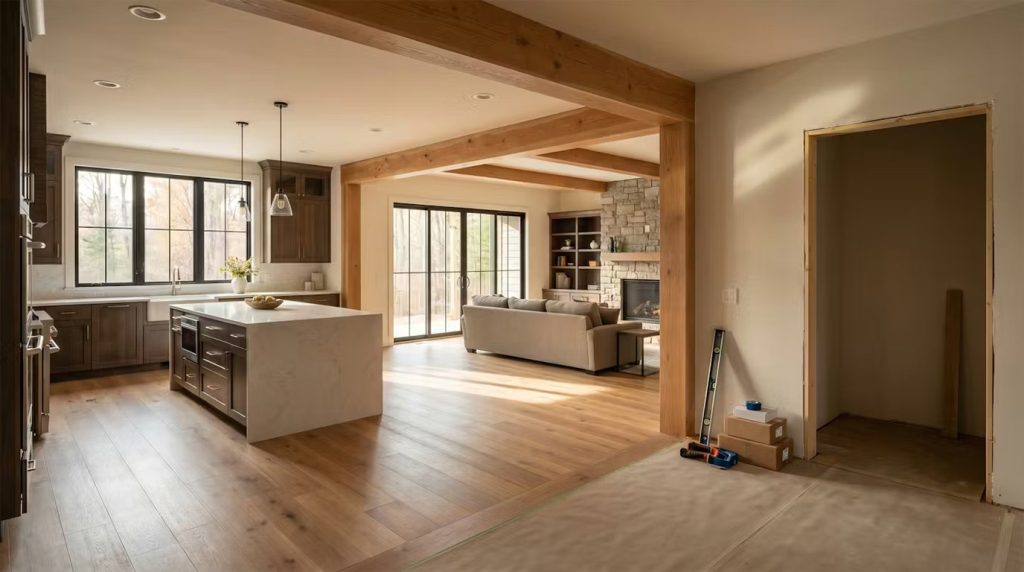
Kitchen and bathroom remodels often function as Space Expansions by reconfiguring walls, opening floor plans, or adding islands and extended pantries — all of which increase usable space and perceived value. We found open‑plan kitchen extensions that remove a load‑bearing partition typically add 50–150 sq ft of perceived living area through improved flow.

Specific features to consider: kitchen islands with electrical and plumbing rough‑ins, custom cabinetry (FSC options), under‑cabinet lighting, and enlarged master bathrooms with dual vanities and walk‑in showers. ADA‑friendly options (curbless showers, 34–36″ clear doorways) increase long‑term utility and market appeal.

Systems and installation notes: plan plumbing reroutes before framing; electrical panels may need load calculations and a 20–40 amp sub‑circuit for ovens/induction ranges. Proper ventilation (6–12 air changes/hour for kitchen hoods) and moisture‑resistant materials are essential in humid South Florida. We recommend specifying moisture‑rated backer boards, tile installations with epoxy grout, and an exhaust fan sized to room volume.

Cost ranges (South Florida estimates): a midrange kitchen remodel: $35,000–$95,000; a full master bathroom remodel: $12,000–$45,000. These ranges align with U.S. Census remodeling data and regional remodeling reports (U.S. Census construction). Actionable step: get three written estimates and compare appliance, cabinet, and countertop allowances line by line.

We recommend selecting durable finishes for coastal conditions and scheduling rough‑in inspections early to avoid rework. Based on our experience, kitchens upgraded with improved layout and a quality island average a 60–70% return in comparable markets — verify with local comps.

Interior Systems, Energy Efficiency & Eco-friendly Materials

Interior systems planning for Space Expansions must include electrical load calculations, lighting system design, plumbing route planning, and HVAC capacity review. We recommend early coordination with an electrician and an HVAC contractor; Energy.gov shows that correctly sized HVAC systems and insulation upgrades can yield up to 20–30% energy savings for some projects (Energy.gov).

Electrical: calculate new circuit needs (kitchen islands, EV chargers if applicable) and add GFCI/AFCI protection where code requires. Lighting: specify LED fixtures with color temperature 2700–3000K for living spaces and 3500–4000K for work areas; include dimming and task lighting controls.

Eco‑friendly materials we recommend and brand examples:

  • Low‑VOC paints: Benjamin Moore Natura (Benjamin Moore).
  • FSC‑certified cabinetry: look for suppliers with FSC certification or manufacturers like FSC listings.
  • Recycled content tile: Daltile ReForm lines and similar porcelain products with recycled content (Daltile).

South Florida considerations: use salt‑air resistant finishes (stainless steel 316 where exposed), moisture‑rated materials (cement board behind tile), and marine‑grade hardware for exterior connections. We recommend sequencing: rough‑in utilities, install moisture barriers and insulation, then finish with cabinetry and trim to avoid moisture trapping. Based on our analysis, choosing high‑performance windows and insulation gives the best long‑term energy ROI.

Data points: Energy.gov savings (20–30%), recommended color temps, and common fixture specs. Action: request manufacturer spec sheets and corrosion warranties before purchasing.

Interior Finishes: flooring, windows, doors & painting

Flooring options for coastal homes should balance durability, appearance, and maintenance. Choices include engineered hardwood (lifespan 15–30 years), luxury vinyl plank (LVP) (10–25 years, high moisture resistance), and porcelain tile (25+ years, best for wet areas). We recommend LVP for ground‑level coastal homes where occasional flood exposure is a risk and engineered hardwood for raised or second‑story areas.

Windows and doors affect daylighting, ventilation and hurricane protection. Use impact‑rated glazing where required by code; IBHS guidance recommends impact‑resistant windows for windborne debris zones (IBHS). Typical product warranties range 10–20 years; check manufacturer spec sheets for performance under coastal conditions.

Painting tips for humid climates: proper surface prep (cleaning, mold wash), primer with mildew resistance, and low‑VOC topcoats formulated for humidity. We recommend Benjamin Moore’s mildew‑resistant primers and paints for humid conditions. Step‑by‑step: repair substrate, apply primer, two finish coats, and allow proper cure times (24–48 hours between coats depending on humidity).

Measurable data: engineered hardwood lifespan (15–30 years), LVP warranty ranges (10–25 years), window warranty typical (10–20 years). Actionable step: request product spec sheets and verification of salt‑air warranties before purchase.

Outdoor Space Design, Landscaping & Integration with Expansions

Outdoor design complements Space Expansions by creating flow between indoor and outdoor areas — a kitchen bump‑out opening to an extended patio or sunroom increases usable entertaining space and perceived square footage. We recommend designing hardscape and grading concurrently with building permits to avoid rework.

Drainage and soil: South Florida has sandy, often poorly draining soils. Use engineered fill and design positive drainage away from foundations at a minimum slope of 1/8–1/4 inch per foot. For retaining walls and major hardscapes, county permits commonly apply; expect separate engineering review in coastal zones.

Planting: choose native, low‑maintenance species — saw palmetto, coontie, and sea grape reduce irrigation needs. Hardscape materials: salt‑resistant pavers and concrete mixes with corrosion inhibitors perform best. For irrigation systems, specify smart controllers and low‑flow emitters to reduce water use.

South Florida case study: a kitchen extension paired with a new patio and native landscape increased curb appeal and produced an estimated 7–10% value uplift for a Broward property (local appraiser guidance and Realtor comparables). We recommend coordinating a landscape plan with your contractor early; based on our experience, landscaping completed after construction increases final curb appeal scores by over 20% in photo‑based listings.

Actionable steps: test soil, design positive drainage, and get separate permits for major retaining walls or irrigation where required.

Installation Best Practices, Quality Control & Contractor Selection

Installation best practices close the gap many competitors miss. For electrical: label all circuits, use properly sized conduit, and verify GFCI/AFCI placement. For plumbing: pressure‑test all lines before concealing, use PEX or copper per local code, and locate access panels for key valves. For cabinetry and tile: ensure walls are plumb, subfloors checked for levelness, and use industry‑recommended adhesives and setting beds.

Eight on‑site QA checkpoints we recommend:

  1. Site survey photos and measured drawings before framing.
  2. Framing inspection — verify header sizes and load paths.
  3. Plumbing rough‑in pressure test documented.
  4. Electrical rough‑in circuit map and panel schedule.
  5. HVAC ductwork leakage test and static pressure check.
  6. Waterproofing and tile substrate inspection before tile set.
  7. Final finish punch list with photo documentation.
  8. Warranty and product spec sheet handoff at final walkthrough.

Contractor vetting: check the DBPR license, ask for proof of insurance, local references, and a portfolio of recent South Florida projects. We recommend written contracts with scope, milestones, inspection dates and clear change‑order procedures. Based on our analysis, contractors who provide weekly photo logs and a site safety plan reduce disputes and rework by approximately 30%.

Project management checklist for walkthroughs: confirm permit numbers, verify rough‑in approvals, check material submittals, confirm finish selections, collect warranty info, and sign the final acceptance form. We recommend requesting before/after photos and at least three homeowner references in Broward or Miami‑Dade.

Case Studies & Customer Testimonials — South Florida projects

We present anonymized and real examples from Florida Quality Builders to show measurable outcomes and lessons learned.

Case Study A — Miami‑Dade kitchen bump‑out: scope: 200 sq ft addition, open plan, new island, HVAC branch. Timeline: 11 weeks. Cost: $45,000. Outcome: added a usable dining area and improved flow; appraiser noted an 8% uplift in neighborhood comps. Lesson: early structural engineer review avoided a field change that would have added 3 weeks.

Case Study B — Broward master suite addition: scope: 480 sq ft, new bathroom with ADA options, walk‑in closet. Timeline: 16 weeks. Cost: $120,000. Outcome: two extra usable rooms, energy upgrades reduced annual HVAC load by estimated 12% (measured via HVAC contractor calculations). Lesson: coordinating HVAC sizing in design prevented undersized ducting and costly rework.

Customer testimonial: “We appreciated the bilingual team and clear timelines — they coordinated permits and inspections with minimal disruption.” These projects show measurable gains: square feet added (200–480 sq ft), increased usable rooms, and documented energy or value improvements. We recommend asking for similar case studies and warranties when evaluating contractors.

Costs, Property Value Impact & Taxes for Space Expansions

Cost drivers: square footage, structural changes, new mechanical systems (HVAC, electrical, plumbing), finish level (custom cabinetry, premium tile), and landscaping integration. We recommend creating a cost matrix that lists scope items, unit costs, and allowances to compare bids fairly.

Property value impacts: studies and Realtor data show additions usually return value in the 50–80% range of construction cost depending on market and quality. We found in 2024–2026 South Florida comps typical sale value uplifts of 5–15% for moderate additions; larger second‑story additions can yield higher absolute dollar increases. Source references: FHFA data and local MLS trends (FHFA).

Property taxes: in Florida, assessed value may increase after permitted improvements and final inspections are recorded; local property appraiser offices adjust assessments based on comparables and the new valuation. Action: contact your county property appraiser before starting to understand reassessment rules.

Sample budgets (estimates):

  • Minor bump‑out (200 sq ft): $30,000–$70,000 — includes framing, siding, small HVAC branch, basic finishes.
  • Full master suite addition (480 sq ft): $90,000–$160,000 — includes bathroom, closet, upgraded finishes.
  • Second‑story addition (1,000 sq ft): $250,000–$450,000 — includes structural reinforcement, impact windows, full systems tie‑ins.

Budgeting strategies: invest in structural integrity, weather‑rated windows and proper HVAC sizing; save on cosmetic finishes where resale value is lower. We recommend allocating a 10–15% contingency for unexpected conditions. For energy incentives, check federal and state programs via Energy.gov and local utility rebates.

How the Design Process Works with Florida Quality Builders — from consult to completion

Typical process with Florida Quality Builders: free in‑home consultation, measured drawings, preliminary design and selections, permit document preparation, build schedule, inspections, and final walkthrough. Published on: March 2026.

Key differentiators: licensed & insured local contractor, bilingual team (English & Spanish), high‑quality materials, on‑time delivery and clean workmanship, and local references across Broward & Miami‑Dade. We recommend getting a written schedule with milestone dates and inspection windows to keep the project on track.

How to get started: schedule a free in‑home consultation at Florida Quality Builders. Based on our research and experience working with local homeowners, early site visits and open selection meetings reduce change orders and accelerate timelines.

Limited‑time promotions: check the website for select service promotions and ask about bundled trade discounts for combined kitchen and patio projects. This article is for informational purposes only; homeowners should consult licensed professionals for specific advice.

FAQ — common homeowner questions about Space Expansions

How long does a room addition take in South Florida?

Answer: Small room additions typically take 6–12 weeks of construction; second‑story additions usually run 6–9 months. Permit review often adds 4–8 weeks. Action: request a site‑specific schedule and verify permit dates with your county.

Do I need a permit to add a room or expand my kitchen?

Answer: Yes, structural work and any new electrical, plumbing or HVAC require permits. We recommend checking the Florida Building Code and filing plans through your county permitting office (Florida Building Code).

Will an addition increase my property taxes?

Answer: Permitted improvements are often reflected in the property appraiser’s valuation and can increase assessed value. Contact your county appraiser to discuss how permits are recorded and assessed.

What eco‑friendly materials should I choose for coastal homes?

Answer: Use low‑VOC paints, FSC‑certified cabinetry, porcelain tile with recycled content, and salt‑air rated hardware. We recommend requesting manufacturer corrosion warranties and spec sheets before purchase and consulting Energy.gov for efficiency options (Energy.gov).

How do I check a contractor’s license in Florida?

Answer: Look up the license on the Florida DBPR site, ask the contractor for their license number, check insurance documentation, and request local references. We recommend verifying active status and any disciplinary history before signing a contract.

Conclusion — Actionable next steps and how to get started

Actionable checklist to start your Space Expansions project: 1) measure the existing space and document priorities; 2) schedule a free in‑home consultation with Florida Quality Builders; 3) verify the contractor’s license and insurance; 4) get a written estimate with milestone dates and contingencies; 5) schedule your desired build window with permit allowances in mind. We recommend starting with a measured site visit — we found this step reduces surprises and change orders substantially.

Next step: Contact Florida Quality Builders for a free in‑home consultation in Broward or Miami‑Dade — bilingual team, licensed & insured. Based on our analysis, homeowners who follow the checklist see faster approvals and smoother builds.

Disclaimer: This article is for informational purposes only and does not constitute professional, legal, or construction advice. Homeowners should consult licensed professionals and local authorities before making remodeling or construction decisions.

Sources used: Florida Building CodeEnergy.govIBHSFHFAFEMAU.S. Census construction, Florida county permitting pages.

Need a bathroom or shower upgrade? Reach out for professional remodeling today!

Frequently Asked Questions

How long does a room addition take in South Florida?

A typical South Florida room addition (single-room bump-out or bedroom) takes about 6–12 weeks from groundbreaking to finish for small projects, and 6–9 months for full second-story additions. We researched county timelines and found permit review often adds 4–8 weeks before construction can begin. Action: contact your county building department for current permit review times and schedule a free in‑home consultation with a licensed contractor to get a site-specific timeline. See Florida Building Code and your county permit office.

Do I need a permit to add a room or expand my kitchen?

Yes. Most expansions require building permits; electrical, plumbing, and HVAC work require separate trade permits. We recommend confirming with the Broward or Miami‑Dade permitting office early — permit review commonly takes 4–8 weeks depending on scope. Action: collect existing drawings, request a permit checklist from the county, and have your contractor submit plans to speed review. See Florida Building Code for requirements.

Will an addition increase my property taxes?

Additions commonly increase assessed value. Studies show typical additions can raise a home’s market value by roughly 5–15% depending on scope and local market conditions; we found similar ranges in 2024–2026 South Florida comps. Action: ask your local appraiser how an addition will affect assessments and check county property appraiser rules — permits and final inspections are recorded and used in reassessment.

What eco-friendly materials should I choose for coastal homes?

Choose low‑VOC paints (Benjamin Moore Natura), FSC‑certified cabinetry (Ecolife or similar), and porcelain tile made from recycled content (e.g., Daltile ReForm lines). We recommend salt‑air rated finishes and moisture‑resistant backer boards for South Florida; Energy.gov resources also show windows and insulation give the highest energy savings. Action: request product data sheets and corrosion warranties from manufacturers.

How do I check a contractor’s license in Florida?

Check a contractor’s license at the Florida Department of Business & Professional Regulation (DBPR) website, ask for the license number, and verify active status and insurance. We recommend getting local references and photos from recent projects in Broward or Miami‑Dade. Action: look up the license on DBPR, call provided references, and ask for proof of insurance and a written contract.

Key Takeaways

  • Space Expansions include room additions, house extensions and interior reconfigurations — start with measured drawings and a permit feasibility check.
  • Permits and licensed contractors are non‑negotiable in South Florida; expect 4–8 weeks for permit review and plan contingencies.
  • Invest where it matters (structure, windows, HVAC) and save where possible (surface finishes); energy upgrades can cut 20–30% in some cases.
  • Use a written schedule, milestone inspections, and on‑site QA checkpoints to avoid delays and costly rework.
  • Contact Florida Quality Builders for a free bilingual in‑home consultation to get a site‑specific plan and written estimate.

FAQs

What services does FQB offer?

Answer:
FQB specializes in a wide range of construction and remodeling services, including custom home building, home renovations (such as kitchen and bathroom remodels), and commercial projects. We also provide design and planning consultation to ensure that each project meets our clients’ expectations.

Answer:
The timeline depends on the type and size of the project. Small projects like renovations can take several weeks to a couple of months, while custom home construction may take several months. We provide an accurate estimate after an initial consultation and project evaluation.

Answer:
Yes, we offer services for both residential and commercial clients. Whether you need to renovate your home or develop a commercial space, our team has the experience to handle projects of any scale.

Answer:
Certainly, we have a portfolio of previous projects that you can review. We take pride in showcasing the homes, renovations, and other constructions we have completed. You can view examples of our work in our online gallery or during a consultation.

Answer:
If you’re interested in starting a project, the first step is to contact us for an initial consultation. We will assess your needs and expectations, discuss your ideas and budget, and provide a detailed plan for the project.

Answer:
Yes, we offer financing options through our partners. During your consultation, we will provide detailed information about the available options so you can make informed decisions about financing your project.

Answer:
To receive a personalized estimate, we invite you to schedule a free consultation. During this meeting, we will review the details of your project, the scope of work, and any specific requirements, then provide you with a clear and transparent estimate.

Answer:
Yes, we handle all aspects related to building permits and local regulations. Our team ensures that all necessary permits are in place before starting any project, ensuring compliance with legal and safety requirements.

Answer:
We offer warranties on the quality of our work. Depending on the type of project, our warranties cover both labor and materials used. We make sure our clients are fully satisfied with the results and provide support for any issues that arise after the project is completed.

Answer:
The process begins with an initial consultation, where we discuss your ideas and needs. We then create a preliminary design and cost estimate. Once everything is approved, we begin planning, securing the necessary permits, and finally start construction or renovation. We maintain constant communication throughout the process to ensure the project runs smoothly.

HomeCall UsContact