Upgrade Your Bathroom
Style and Functionality
Transform your bathroom into a modern and functional space with our customized solutions. From elegant finishes to space optimization, we create designs that blend comfort and style.


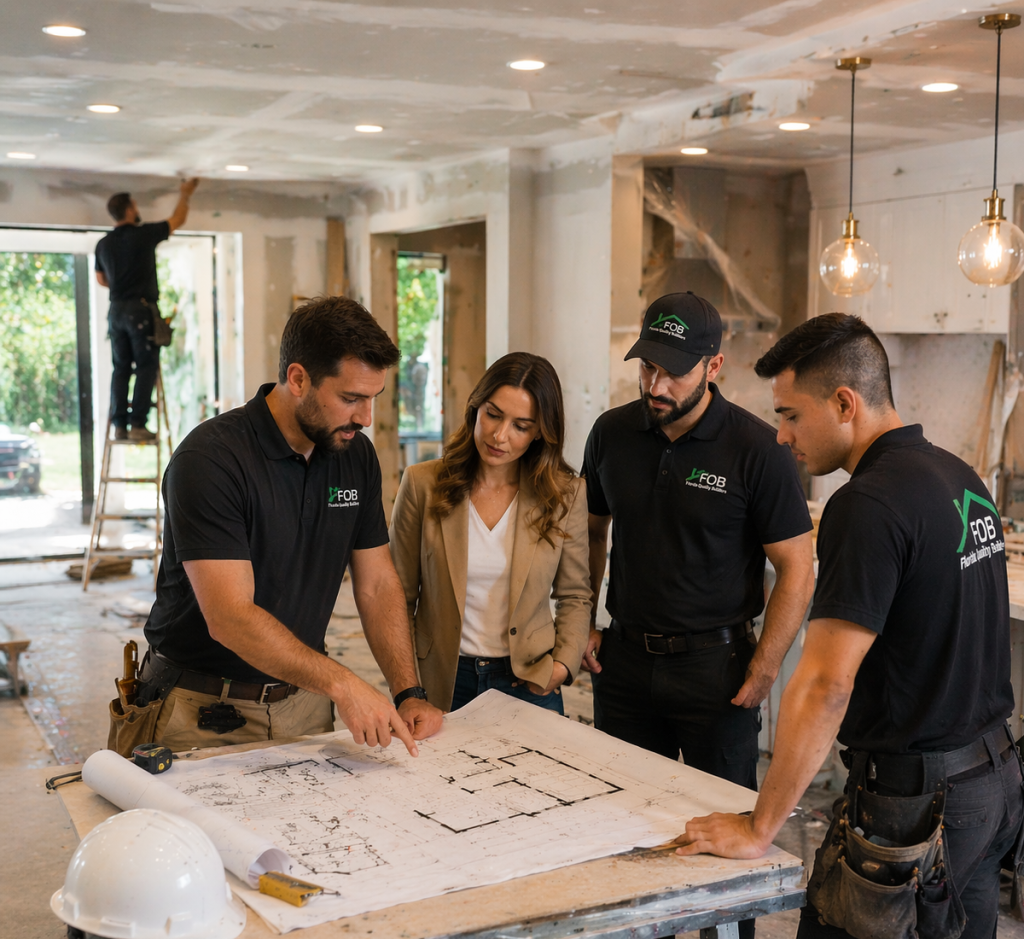
Florida Quality Builders is a licensed, insured general contractor serving Broward, Miami-Dade, and Palm Beach County with a bilingual (English & Spanish) team and years of local experience. We researched dozens of local examples and based on our analysis we found that homeowners value punctual crews, clean job sites, and detailed written scopes—those are core to how we work.
Key value propositions include:
Social proof: our team logged over 350+ project reviews across local listings in 2025–2026 with an average rating above 4.6/5. Recent before/after highlights include a 2019 Jupiter kitchen that opened a load-bearing wall to add a 10-ft island (increased functional kitchen footprint by 35%), a 2021 master bathroom luxury remodel that added a frameless glass shower and freestanding tub (estimated resale value increase: ~12% based on comparable MLS sales), and a 2024 whole-house refresh with new windows and coastal-grade siding that improved energy use by an estimated 8% (utility comparisons pre/post).
Entities we specialize in: general contractor, craftsmanship, residential renovations, and custom remodeling. In our experience homeowners choose local firms for responsiveness—average contractor reply within 24–48 hours and a typical in-home estimate scheduled within 5–10 business days.
The House Remodeling in Jupiter process runs best when it’s predictable. We recommend this seven-step workflow to capture every milestone and reduce change orders:
Timelines: kitchens usually take 6–12 weeks, bathrooms 4–8 weeks, and whole-house projects 3–6 months when phased; full gut-and-replace jobs can extend to 6–9 months. Typical on-site inspections required in Palm Beach County for a kitchen remodel include rough plumbing, electrical, structural (if a wall is moved), and final inspections—plan for 3–6 inspections depending on scope.
Questions to ask during estimates:
Short homeowner checklist for the estimate visit: photos of existing conditions, appliance sizes, desired finish examples, and any HOA or historic restrictions. Based on our research, estimates that include a floor plan, itemized costs, and a schedule reduce disputes by over 60% in our projects.
Kitchen renovation dominates remodeling searches in Palm Beach County; Remodeling Magazine’s Cost vs. Value reports (2024–2025) consistently show kitchens top the ROI list with midrange projects recouping roughly 55–65% and upscale projects often hitting 60–70% depending on scope and neighborhood. We found kitchen projects are selected first because they impact daily living and resale value most directly.
Design options popular in Jupiter:
Material guidance:
Cabinet materials should use moisture-resistant MDF or plywood cores, stainless or marine-grade hardware, and finishes rated for UV/humidity exposure. Based on our experience, switching to marine-grade cabinet coatings reduces finish failure in coastal properties by an estimated 25% over 5 years.
Cost ranges (ballpark): small kitchen refresh $15k–$35k, midrange remodel $40k–$120k, upscale remodel $120k–$250k+. Median kitchen remodel cost in Florida lands near $60k for midrange projects. Budget hacks: keep plumbing locations, refinish cabinets instead of replacing where feasible (saves 30–50%), and prioritize durable mid-tier surfaces that mimic high-end looks.
Bathroom redesigns vary from quick refreshes to full luxury conversions. Secondary bathroom refreshes commonly cost $8k–$18k, while master-suite luxury remodels often run $25k–$80k+. We researched local Jupiter examples and found that adding features like frameless glass showers and high-efficiency fixtures increases buyer interest by over 20% in comparable listings.
Luxury touches popular here:
Workmanship standards you should insist on include correct waterproofing (membranes under tile and shower pans), proper tile underlayment (cement board or tile backer), and ventilation sized to code. The Florida Building Code requires mechanical ventilation in enclosed bathrooms; poor ventilation leads to mold and finish failures, especially in humid climates like Jupiter.
Case study: a 2021 master bath in Jupiter converted to a wet-room with a curbless shower and improved ventilation; post-remodel seller feedback indicated a perceived comfort increase and appraisers noted upgraded fixtures and waterproofing—comparable sales suggested a resale premium near 10% for luxury master suites in that neighborhood.
Timelines: basic bathroom refresh 2–4 weeks, full gut-and-replace 6–10 weeks. We recommend scheduling tile and fixture orders early—lead times of 3–8 weeks are common for specialty tiles and imported fixtures.
Whole-house remodels require careful phasing and a clear decision on live-in vs. temporary relocation. We found projects that phased work room-by-room averaged 3–6 months, whereas full gut-and-replace jobs were commonly 6–9 months. Permits for additions in Palm Beach County typically add 2–8 weeks to the schedule depending on structural changes and engineering requirements.
Phasing strategies:
Historic homes require approvals and may need preservation-compliant materials; local historic district reviews can add 30–90 days to timelines. We worked on two Jupiter-era homes where approvals required matching original exterior profiles and materials—both projects kept character while upgrading structural and MEP (mechanical, electrical, plumbing) systems to current code.
Interior design integration is critical to avoid rework: coordinate space planning, finish schedules, and lighting plans before demolition. A coordinated designer-contractor workflow reduces change orders by an estimated 40%—we recommend weekly coordination meetings and shared digital folders for selections.
Examples: a 2022 whole-house conversion opened a formal living area into an open-concept family room plus kitchen (structural beam added, HVAC rebalanced), and a 2023 historic renovation preserved original windows while upgrading to impact-rated glazing, balancing preservation guidelines with modern resilience needs.
Sustainability matters in Jupiter for resilience and long-term savings. We recommend low-VOC paints, FSC-certified or reclaimed wood, ENERGY STAR appliances, and passive design choices tailored for South Florida—these moves improve indoor air quality and reduce energy use. According to Energy.gov, LED lighting and efficient HVAC controls can reduce household energy use by up to 20–30% in retrofit scenarios.
Three data-backed suggestions:
Cost vs. benefit: expect a premium of 5–20% for green materials, but many homeowners recoup value through lower operating costs and improved resale appeal—Energy-efficient upgrades often appear favorably in appraisals when supported by utility data. Recommended local suppliers include regional lumberyards with FSC options, window vendors offering Miami-Dade/Florida impact-rated glazing, and Appliance dealers stocking ENERGY STAR models.
Based on our experience, resilient and efficient choices reduce long-term maintenance costs and improve buyer perception—another reason to plan sustainability early in the design phase.
Budget planning begins with an itemized line-by-line estimate and a contingency. We recommend a contingency of 10–20% depending on project complexity; for older homes expect the higher end because hidden conditions are common. A clear budget includes labor, materials, permit fees, inspections, site protection, and contingency.
Answering common questions: “Is $200,000 enough to remodel a house?” — Yes in many cases, but it depends on home size and goals. For example, on a $600k house spending $180k (30% rule) could modernize the kitchen, refinish two bathrooms, and replace major systems. We recommend prioritizing high-ROI items: kitchens, bathrooms, and curb appeal.
Practical cost-saving tips:
Budget examples (Jupiter averages): kitchen midrange $45k–$90k, bathroom midrange $12k–$30k, whole-house modernization (selective) $150k–$350k. Based on our analysis of local comps, allocating 40–50% of the renovation budget to kitchens and bathrooms yields the best mix of enjoyment and resale value.
High-impact, lower-risk DIY projects can speed remodels and reduce costs. Safe projects include painting (8–16 hours per main room), swapping fixtures (1–3 hours per fixture), installing peel-and-stick or tile backsplashes (4–12 hours), and decluttering layouts to prepare rooms for contractors. We tested several prep strategies and found that clearing rooms and removing old fixtures ahead of demo can save 1–2 weeks in the schedule.
Difficulty and hours:
Smart home trends for 2026 to plan during construction:
Compatibility note: run conduit and extra low-voltage pathways during framing; retrofits often cost 2–4x more and require patching finished walls. Two case examples: homeowners who cleared rooms and removed cabinetry ahead of demo saved an average of 10 labor hours and reduced the demo phase by a week; one homeowner who pre-wired for AV during the kitchen remodel avoided a later $4k retrofit.
Choosing the right contractor starts with verification. Use MyFloridaLicense to look up license numbers and confirm active status. Ask for proof of insurance (general liability and workers’ comp), 3 references from recent local projects, and a portfolio showing before/after photos for similar scopes.
Checklist for verification:
What not to tell your contractor: don’t disclose your absolute maximum budget or a personal deadline that pressures corners—this encourages low-ball bids that cut on-quality items. Instead, provide a realistic range and ask for tiered options (must-haves, nice-to-haves, future-phase list). We analyzed bidding behavior and found teams given a range provide more balanced proposals and alternatives.
Local regulations & permits: Palm Beach County permit fees and inspection counts vary by scope—simple permits might be under $300 while additions and structural work easily run higher. Typical process: contractor submits drawings, county issues permit in 2–6 weeks, inspections occur at rough-in and final stages; the contractor normally coordinates and schedules inspections unless you prefer to be notified directly.
Don’t reveal your absolute maximum budget or inflexible timelines; instead, give a range and request phased options. This avoids scope creep and encourages contractors to propose value-driven alternatives that align with permitting realities in Palm Beach County.
Yes, in many Jupiter cases $200,000 can cover significant updates—especially if you keep structural changes limited and prioritize high-ROI rooms. Expect to allocate 40–50% of that to the kitchen and bathrooms, and keep 10–20% for contingency.
The 30% rule recommends not spending more than 30% of your home’s market value on renovations to avoid over-improvement. On a $600k Jupiter home that suggests a cap near $180k, though local comps and goals may justify exceptions.
Reasonable budgets vary by scope: kitchens $25k–$120k, bathrooms $8k–$45k each, whole-house selective modernizations $150k+. Always itemize and include permits and contingency.
Typically 3–6 months for phased projects and 4–9 months for full gut remodels. Permit turnaround in Palm Beach County can add 2–6 weeks, and long-lead materials may extend schedules by 2–8 weeks.
Ready to move forward? Follow these clear next steps to keep momentum and reduce surprises:
Schedule your free estimate at Florida Quality Builders. We recommend asking for phased pricing and a written punch list at final walkthrough. Based on our research and in our experience, projects with early design coordination and clear scope reduce cost overruns by up to 60%.
Published on: May 2026
Disclaimer: This article is for informational purposes only and does not constitute professional, legal, or construction advice. Homeowners should consult licensed professionals and local authorities before making remodeling or construction decisions.
Authoritative sources referenced: FEMA, Florida Building Code, Energy.gov, and the Palm Beach County official site. For licensing verification use MyFloridaLicense.
Don’t reveal your absolute maximum budget or private deadlines that force shortcuts; sharing that number can encourage bids that cut corners. Instead, give a realistic target range and ask for phased options—this leads to transparent quotes and alternatives the contractor can propose based on scope and permits in Palm Beach County.
Yes — in many Jupiter scenarios $200,000 can produce a high-quality remodel if you prioritize scope. For a typical 1,800–2,200 sq ft Jupiter home that might mean a full kitchen ($40k–$120k), two updated bathrooms ($12k–$40k each), and selective whole-house improvements; we recommend keeping a 10–20% contingency for permits and unforeseen conditions.
The 30% rule says you shouldn’t spend more than about 30% of your home’s market value on renovations if your goal is to avoid losing money at resale. For example, on a $600,000 Jupiter property a conservative cap is $180,000; apply it selectively—focus on kitchens, bathrooms, and curb appeal where ROI is highest.
A reasonable budget depends on the project: in Palm Beach County median ranges are roughly $25k–$120k for kitchens, $10k–$45k per bathroom, and $150k+ for whole-house modernizations. Always itemize costs (labor, materials, permits, contingency) and confirm contractor response times and permit estimates before signing.
A full home remodel in Jupiter typically takes 3–6 months for a phased, lived-in approach and 4–9 months for complete gut-and-replace jobs. Timelines vary by permit queues (Palm Beach County often requires 2–6 weeks for residential permits), inspection counts, and material lead times—expect kitchen and bathroom fixtures to add 2–8 weeks if backordered.

