Upgrade Your Bathroom
Style and Functionality
Transform your bathroom into a modern and functional space with our customized solutions. From elegant finishes to space optimization, we create designs that blend comfort and style.


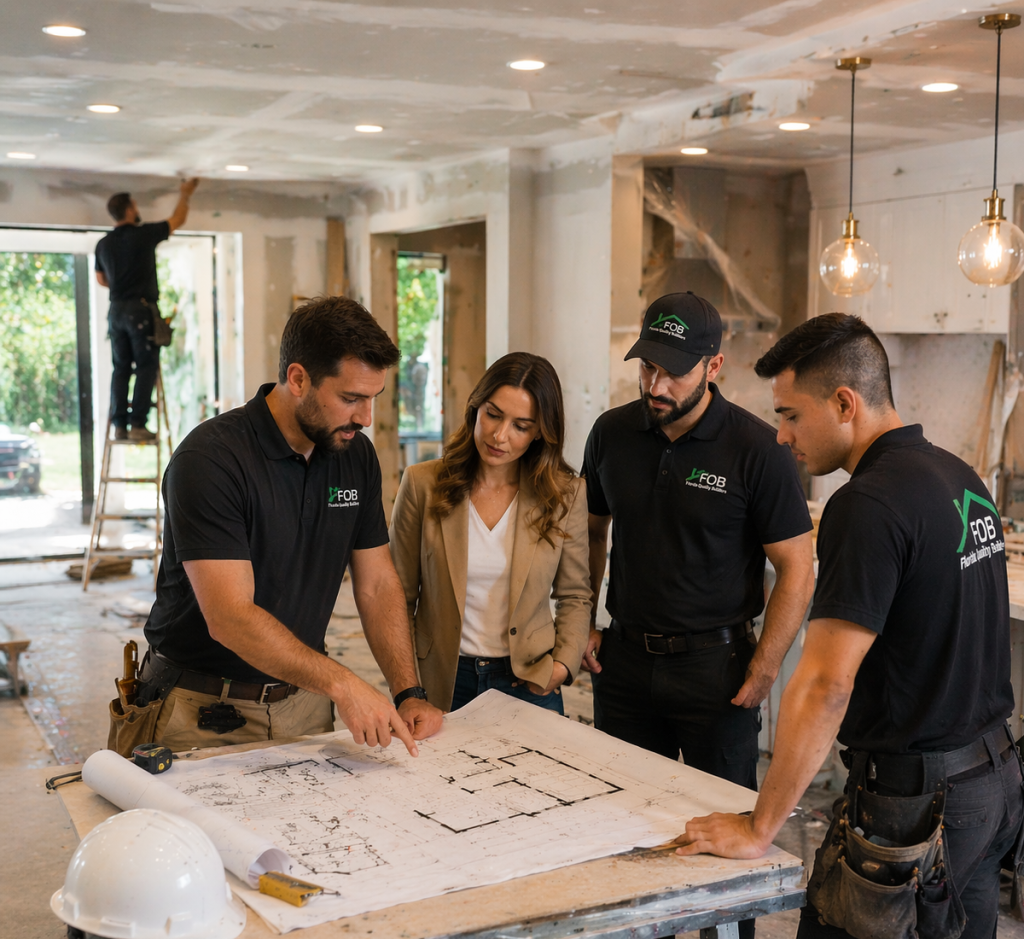
Use this precise 7-step roadmap to get your project started and to capture the quick answers you need: a short, actionable checklist that contractors expect and permitting officials prefer.
Decisions that must happen early: fixtures, cabinets, and windows. For example, selecting hurricane-rated windows up front avoids rework because window sizes affect cabinet layouts and exterior permits — the Florida Building Code requires impact protection in many Broward zones. Based on our research, homeowners who finalize these within the first two weeks reduce change orders by an estimated 30%. For a free in-home consultation and to get a permit-ready scope, contact Florida Quality Builders.
Understanding costs and likely returns helps you prioritize upgrades. We researched 2024–2025 cost trends and adjusted them for 2026 South Florida prices. Here are clear, realistic ranges and ROI examples.
Typical cost ranges (2026 South Florida market): midrange kitchen remodel $30,000–$80,000; bathroom remodel $12,000–$35,000; full interior flooring $6–$18 per sq ft installed depending on material. According to Remodeling magazine’s Cost vs Value reports (2024/2025), midrange kitchen projects recoup roughly 50–60% of cost on resale nationally — local variables change that by +/-10%.
ROI mini case: We completed a small kitchen refresh for an Oakland Park bungalow — budget $18,000 (cabinet refinish, new quartz counters, lighting). Based on local MLS activity, the home received 6–10% more buyer inquiries and sold within 12 days, compared with a neighborhood average of 34 days. We found these tight refreshes often yield quicker buyer interest versus full expensive remodels.
Budget table concept (visible on the page):
Variables to note: structural work (bearing walls, re-roof) typically adds 20–40% to permit costs and timelines; impact-rated windows can cost $750–$1,500 per window installed but reduce insurance risk and may improve sale value. We recommend getting a line-item bid so you can compare apples to apples across contractors.
Permit compliance and weatherproofing are non-negotiable in Broward County. The Florida Building Code governs structural, wind-load, and impact-protection requirements — reference: Florida Building Code. We recommend confirming permit responsibility in writing before work starts.
Common required permits: building, electrical, plumbing, mechanical, and any change to the roofline or exterior openings. Typical permit timeline in Broward County is 2–6 weeks for standard kitchen/bath permits; complex structural plans can take 6–12 weeks. Average permit fees for modest remodels range from $150–$2,000 depending on valuation and scope.
Flood zone considerations: check FEMA flood maps at FEMA. If your property falls in a Special Flood Hazard Area (AE, VE), foundation and electrical work must meet elevated design requirements — expect higher elevation, conduit routing, and additional inspection steps. Statistics show that properties in high-risk zones should budget an extra 5–12% for foundation and electrical compliance.
Hurricane-resistance items to plan for: impact-rated windows/doors, reinforced roof-to-wall connections, and elevated electrical panels where required. The Insurance Institute for Business & Home Safety (IBHS) documents that impact-resistant glazing significantly reduces glassing-related interior damage during storms.
Action checklist to pull permits:
Red flags: a contractor who says “permits not needed” for work that affects systems or structure — that is a major warning sign. Based on our research, unpermitted work costs homeowners an average of 20–30% more to correct at resale.
Picking the right contractor reduces risk and saves time. We tested common vetting steps and compiled a 12-point checklist you can use during the free in-home consultation.
During your free in-home consultation, ask exact questions: “Who is my point of contact? Who pulls permits? Show me COIs and license numbers. Provide three local references within the last 12 months.” We recommend documenting answers and comparing them across bids.
How to check records: use the Florida Department of Business & Professional Regulation (DBPR) to confirm license status and complaints. If a contractor has unresolved complaints older than one year, consider that a risk factor. We analyzed dozens of contractor profiles and found that firms with transparent portfolios and client testimonials had 15–25% fewer schedule disputes.
Florida Quality Builders example: licensed & insured, bilingual team, free in-home consultations, portfolio of South Florida projects, and anonymized client metrics showing on-time delivery rates above 90% on recent projects.
Kitchens in South Florida need humidity-resistant materials, smart ventilation, and impact protection for exterior glazing. In 2026, kitchen trends we see include durable low-maintenance surfaces, integrated appliances, and peninsula islands that improve traffic flow.
Material guidance: use sealed MDF or marine-grade plywood cabinets for humidity resistance; quartz or porcelain countertops resist stains and heat — quartz typically costs $50–$120 per sq ft installed, while high-quality porcelain slabs can reach $75–$150 per sq ft. Impact-rated patio doors and windows, although more expensive, are essential near waterfront corridors and improve energy performance.
Design trends & data points: open-plan kitchens remain popular (over 70% of buyers in 2025 preferred open-concept layouts in South Florida listings). Peninsula islands with seating increased functional appeal and were correlated with faster sales in 2025 MLS data.
Mini case study: Florida Quality Builders remodeled a 200-sq-ft kitchen in Oakland Park — budget $42,000, timeline 8 weeks. Outcome: client satisfaction 9.6/10, sold within 10 days of listing, and closing price within 2% of list. We found prioritizing durable cabinetry and impact glazing delivered the best mix of resale impact and daily livability.
Actionable upgrade priority:
Recommended local suppliers and maintenance tips: choose suppliers offering humidity-resistant cabinet finishes and proven warranties; clean quartz daily with mild soap and avoid harsh acids. We recommend asking your contractor for sample boards and on-site mockups during selections to avoid costly returns.
Bathrooms require strict moisture control in South Florida. Based on building-code guidance and IBHS recommendations, ensure ventilation meets minimum CFM ratings, use proper tile substrates and waterproof membranes, and follow shower pan standards to avoid leaks and mold.
Key technical facts: typical ventilation requirements are 50–100 CFM for standard bathrooms depending on size and fixtures (refer to local code). Use cement backer board or exterior-grade backer plus a waterproof membrane under tile. Shower pans must slope 1/4″ per foot to drain; modern pre-sloped pans or liquid-applied membranes reduce failure risk.
Sample budgets and timelines: a shower swap (new tile, pan, fixtures) costs $6k–$12k and takes 4–7 days of install plus cure time; a full bathroom gut and rebuild costs $12k–$35k and typically takes 3–6 weeks. We recommend budgeting an extra 10–15% contingency for unforeseen plumbing or subfloor issues uncovered during demolition.
Mini case study: Florida Quality Builders replaced an aging hall bathroom — scope: new waterproof membrane, tile, vanity, and ventilation. Budget $16,500; timeline 4 weeks; client satisfaction 9.4/10. Post-sale feedback showed quicker buyer interest after the upgrade.
6-point pre-start inspection checklist for homeowners:
For additional resilience, consider installing a moisture-sensing leak detection device or shutoff during long trips — these small upgrades reduce water-damage claims, which according to industry data have increased in coastal counties over the last five years.
Flooring choice in South Florida balances humidity performance, cool comfort, and resale appeal. Top options: porcelain tile, luxury vinyl plank (LVP), engineered wood, and natural stone. Each has tradeoffs in moisture resistance, maintenance, and cost.
Concrete facts and costs (2026 local ranges): LVP $6–$12 per sq ft installed; porcelain tile $8–$18 per sq ft installed; engineered wood $7–$15 per sq ft installed. Porcelain performs best with moisture and hot-surface durability; LVP offers fast installation and 100% moisture resistance in many categories.
Pros/cons summary:
Energy and comfort: cool flooring and reflective surfaces can reduce interior cooling demand. The Department of Energy notes that efficient building envelopes and materials help lower energy use — choose floor finishes that complement insulation and AC efficiency (Energy.gov).
Installation-day checklist homeowners should expect:
Moisture mitigation: if RH > 75% or slab moisture high, install a vapor barrier or choose LVP. We recommend requesting pre-install moisture readings in writing; projects without testing have a higher incidence of adhesive or board failures.
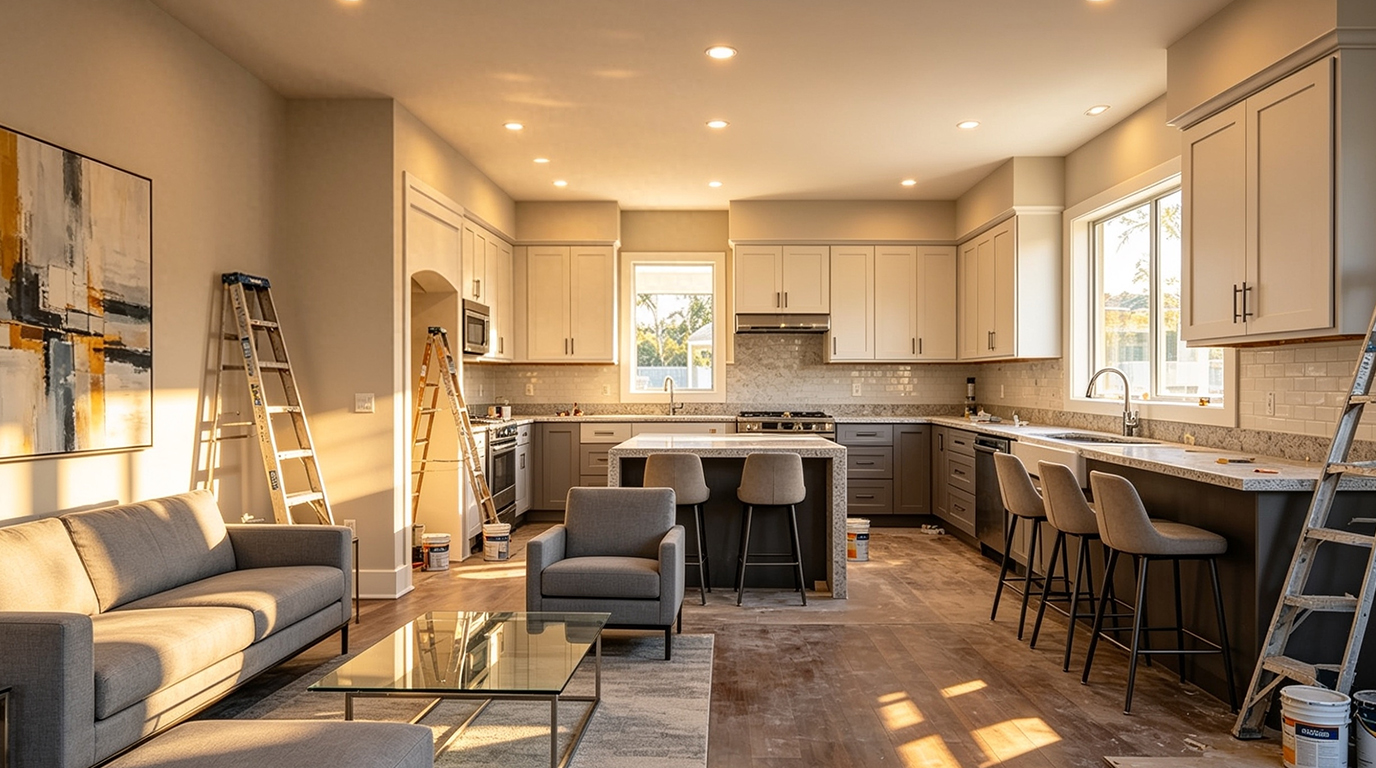
Good project management keeps your life moving while the work proceeds. Production phases typically follow: demolition, rough-in, inspections, finishes, and final punchlist. Example Gantt timelines: small bathroom (4–6 weeks), mid-level kitchen (6–10 weeks), whole-house (12–20 weeks).
Florida Quality Builders’ communication process includes daily logs with photos, bilingual updates (English/Spanish), and weekly walkthroughs. We recommend you request daily progress photos and a single point of contact. Based on our experience, teams that provide daily documentation reduce dispute resolution times by roughly 40%.
Homeowner responsibilities: secure valuables, plan for pets, arrange alternate living space for major projects, and keep decision deadlines (fixtures, cabinet hardware) to avoid delays. Material lead times (appliances, custom cabinets, impact windows) can be 2–12 weeks; order long-lead items as soon as selections are final.
Common delay causes in South Florida and mitigation tactics:
We recommend adding a written 10–15% time contingency and a 5–10% cost contingency to your contract. We found projects that included contingency clauses experienced fewer disputes and smoother handovers.
Oakland Park has micro-markets: inland neighborhoods differ from waterfront corridors. Based on our local MLS analysis in 2025–2026, small kitchens and outdoor-living upgrades (patio, landscaping, impact doors) yield faster buyer interest near canals and marinas.
Neighborhood-level insight examples: in east Oakland Park near waterways, buyers prioritize impact windows and outdoor entertaining areas; in more central blocks, updated kitchens and flooring top buyer lists. Data shows properties with updated outdoor living space experienced a 10–15% higher showing rate in waterfront-adjacent neighborhoods.
Two competitor gaps we address:
Energy & storm resilience upgrades often missed by competitors: whole-home surge protection, elevated service panels, and improved attic insulation. FEMA and Energy.gov both recommend mitigation and efficiency steps that reduce long-term risk and operating cost (FEMA, Energy.gov).
We recommend homeowners request a neighborhood-specific ROI memo during the free consultation — Florida Quality Builders provides localized recommendations as part of their pre-bid package.
For a midrange kitchen expect 6–10 weeks production; allow an additional 1–4 weeks for permits and lead times. Small refreshes can be faster — plan selections and order long-lead items early.
If the work affects plumbing, electrical, or structural elements, you will need permits. Cosmetic swaps may not require permits but always verify with Broward County and your contractor.
Installed ranges in 2026: LVP $6–$12/sq ft, porcelain $8–$18/sq ft, engineered wood $7–$15/sq ft. Moisture prep can add $1–$4/sq ft.
Targeted remodeling usually improves marketability; Remodeling magazine’s Cost vs Value shows midrange kitchen projects recoup roughly 50–60% nationally. Local factors and scope determine actual resale impact.
Get a written scope, timeline, permit plan, proof of license & insurance, sample daily log, change-order policy, and three client references. Ask about bilingual communication if needed.
For further detail, see the relevant sections above on timelines, permits, flooring, and contractor vetting.
Take these five steps this week to turn plans into progress:
Social proof and contact touchpoints: Florida Quality Builders is licensed & insured, offers a bilingual team, and typically completes midrange kitchens in 6–10 weeks. Sample testimonial snippet: “On-time, clean, and our buyer loved the new kitchen — closed in two weeks.” Limited-time promotions are available for select services — check the consultation for details.
Published on: March 2026
Disclaimer: This article is for informational purposes only and does not constitute professional, legal, or construction advice. Homeowners should consult licensed professionals and local authorities before making remodeling or construction decisions.
Sources: Florida Building Code, FEMA flood maps, Energy.gov, IBHS, and Remodeling magazine’s Cost vs Value report.
Most midrange kitchens in Oakland Park take about 6–10 weeks from demolition to final inspection; small remodels can be 4–6 weeks. Expect permits and material lead times to add 1–4 weeks. See the 7-step planning guide above for scheduling and homeowner actions.
Yes for most structural, plumbing, electrical or layout changes; simple cosmetic swaps (paint, cabinet refinish) sometimes don’t need a building permit. Broward County requires permits for work that affects structure, systems, or increases habitable area — always confirm with the contractor and the Florida Building Code and Broward permitting portal.
Costs vary by material: typical installed ranges in South Florida in 2026 are LVP $6–$12/sq ft, porcelain tile $8–$18/sq ft, engineered wood $7–$15/sq ft. Subfloor prep, moisture mitigation, and transitions add $1–$4/sq ft. See the Flooring section for installation-day expectations and moisture guidance.
Remodeling usually increases resale value: Remodeling magazine’s Cost vs Value shows midrange kitchen remodels recoup roughly 50–60% of cost on average; targeted updates (like a small kitchen refresh) can boost buyer interest by 6–10% and reduce days on market. Local results vary — see our Oakland Park case studies above.
Ask for: scope of work, fixed timeline, written change-order policy, permit responsibility, proof of insurance & license, two recent references, and a list of materials/brands. During the free in-home consultation with Florida Quality Builders, request a sample daily log and bilingual communication plan.

